
Bell is one of Canada’s largest telecommunications providers, serving millions of customers across mobile, TV, internet, and home services. To support this scale, Bell invests heavily in digital service channels to help customers manage products, discover new offerings, and resolve issues quickly from their devices.
However, customer behavior was shifting. Users increasingly expected personalized, mobile-first experiences that adapt to their services and usage, not static interfaces that treated every customer the same. The opportunity: create a Home Feed that feels relevant, clear, and supportive the moment users open the app.
Bell's mobile app landing screen was actually the services screen—a generic, one-size-fits-all interface that didn't show personalized information based on a client's accounts or services. When clients subscribed to new services, they received no guidance on how to use them, and the app provided no assistance or onboarding. This fragmented experience forced customers to contact support teams for help with services they had just purchased—creating unnecessary support burden and customer frustration.
User Problems:
The in-app landing screen is actually the services screen. It does not show personalized information based on a client's accounts. Also, when a client subscribes to new services, they do not get any guidance on how to use them. The app does not provide any assistance or onboarding of this new service. This results in them having to contact the support teams and spend more time and effort.
Business Problem:
More support is required for something that can be provided in a self-serve model within the app. This generates higher cost of operations which is bad for business.
I owned the end-to-end experience design for Bell's personalized home feed—an AI-powered content discovery and service onboarding experience designed to surface personalized information, guide service usage, and reduce support dependency. Working alongside product managers, data scientists, and content strategists, I led the design workstream from discovery through delivery, creating a personalized feed that reduced support calls, improved service discovery, and increased customer engagement.
Bell's leadership recognized that the lack of personalized content and service onboarding was driving unnecessary support calls and preventing customers from discovering and using services they had purchased. The personalized home feed initiative aimed to transform support from a reactive service into a proactive, self-serve solution. Key business objectives included:
We benchmarked personalized content feed experiences from leading technology platforms (Facebook, Instagram, Twitter, LinkedIn) and service providers (Netflix, Spotify, Amazon) to inform a more effective, engaging personalized home feed. Key insights revealed that successful content feeds prioritize personalization, relevance, and discovery—surfacing content based on user behaviour, account data, and preferences. We adapted these patterns to Bell's service ecosystem, creating a personalized feed that transformed service discovery from a reactive experience into a proactive, engaging one.
Interviews with 32 Bell customers and analysis of support ticket data revealed consistent patterns around service discovery frustration:
These insights shaped our approach: creating a personalized home feed that surfaces relevant content, guides service usage, and reduces support dependency.
We designed a personalized home feed that transforms Bell's app landing screen from a generic services screen into a personalized, account-aware experience. The feed surfaces relevant content based on user accounts, service usage, and viewing behaviour—enabling service discovery, onboarding, and engagement without support intervention.
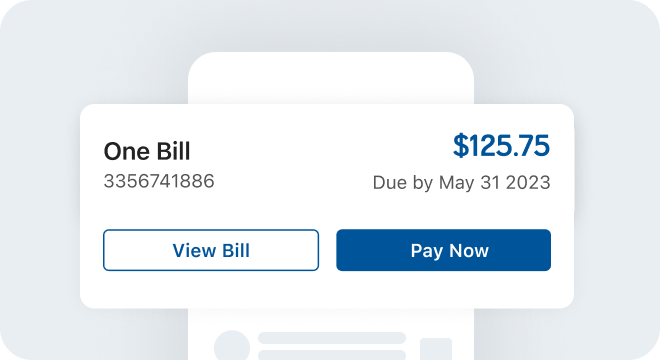
Replace generic services screen with personalized content based on user accounts. The feed shows account-specific information, service usage data, and relevant offerings—making the landing screen feel tailored to each user's relationship with Bell.
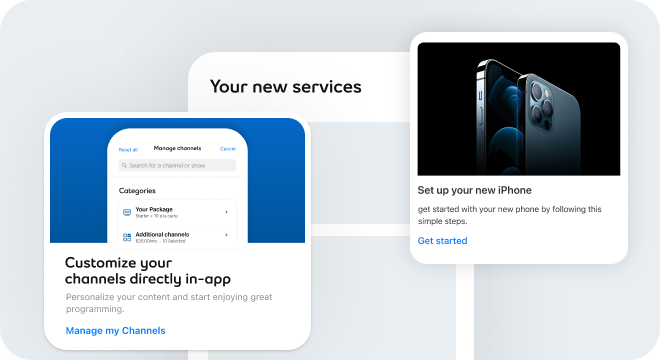
When users subscribe to new services, the feed surfaces step-by-step onboarding cards and usage tips. Interactive guides help users activate services, configure settings, and discover features—reducing the need to call support for basic setup questions.
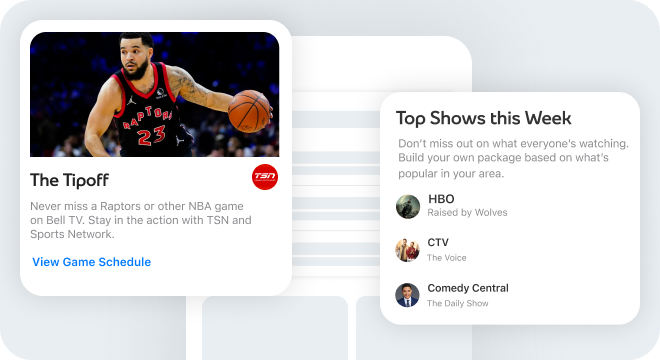
Leverage viewing habits and preferences to surface personalized TV programming recommendations. The feed shows shows, movies, and channels based on user behaviour—increasing engagement and discovery of content relevant to each user's interests.
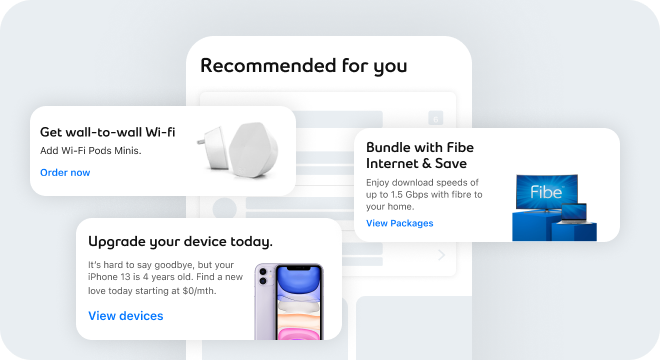
Surface new services and offerings to relevant customers based on account data and service usage. The feed intelligently promotes new offerings to users who are likely to benefit—increasing service discovery while reducing irrelevant promotion fatigue.
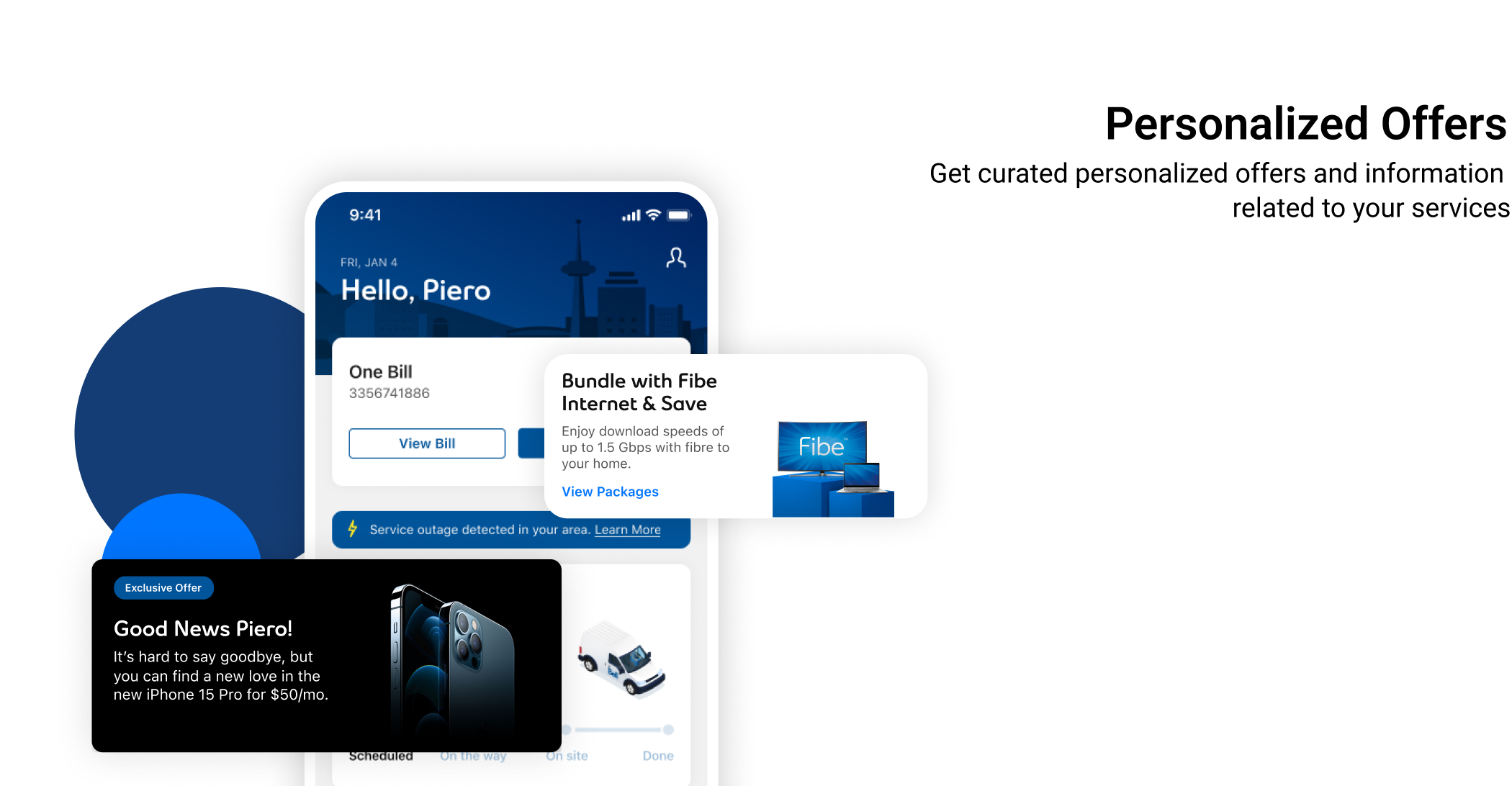
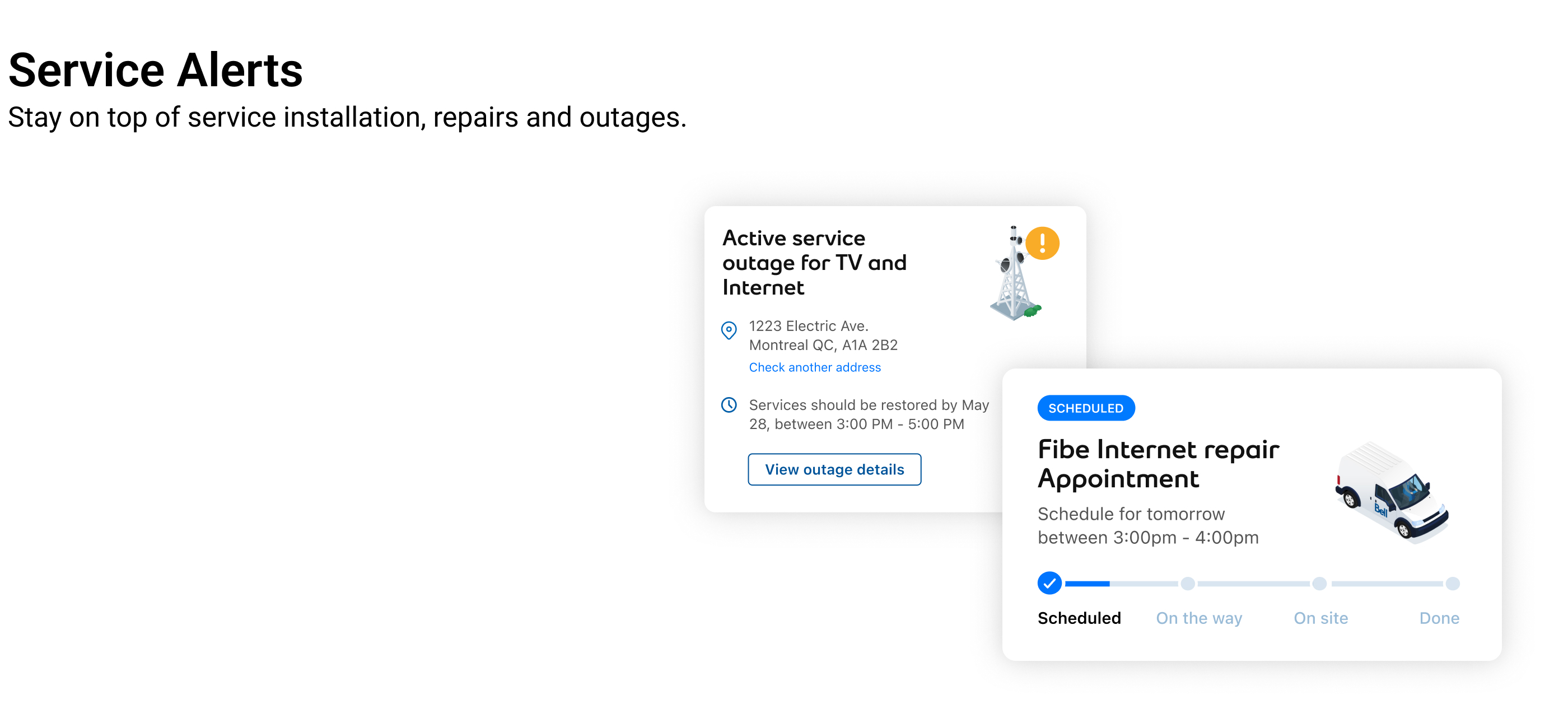
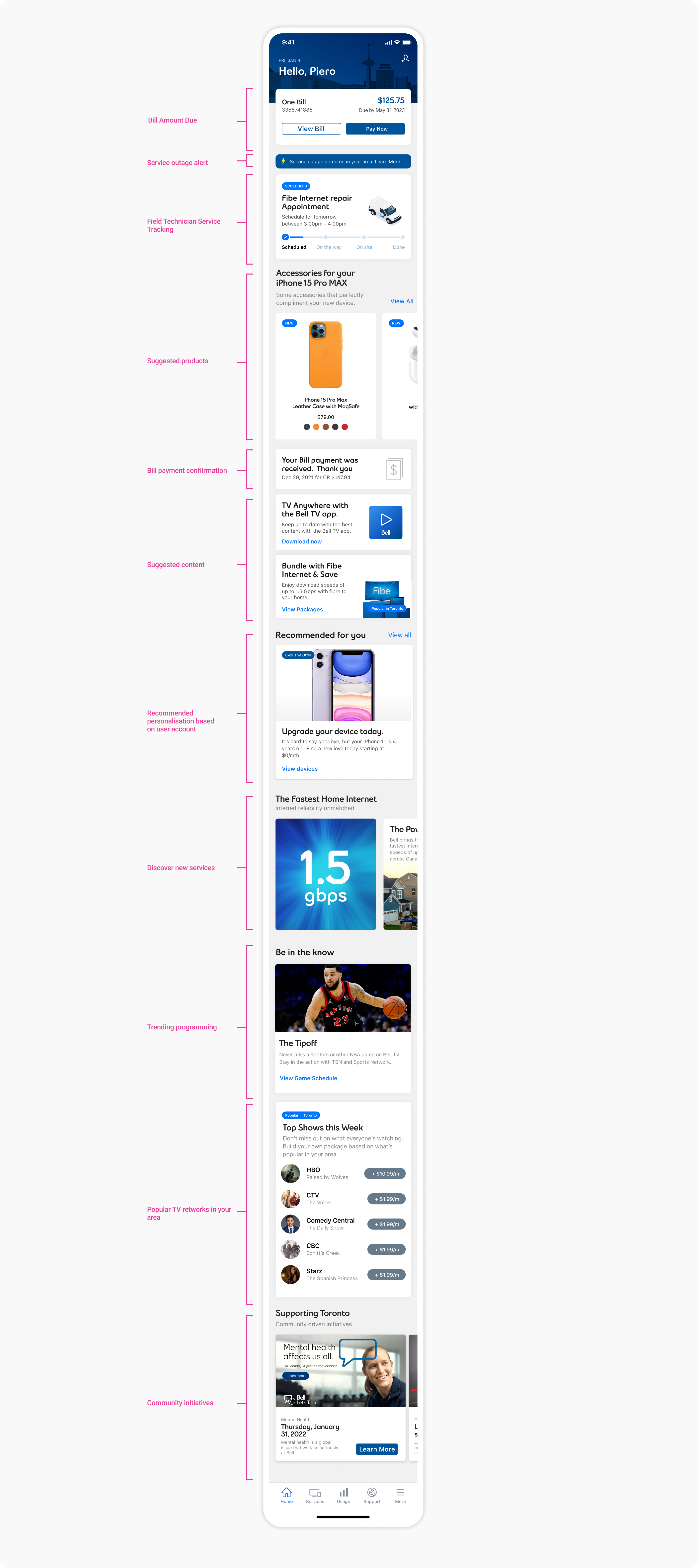
To extend the value of the personalized home feed beyond static content, we designed an intelligent personalization engine that learns from user interactions and adapts over time. The engine analyzes account data, service usage patterns, viewing behaviour, and engagement metrics to surface the most relevant content at the right moment—transforming the feed from a generic list into a personalized experience.
The personalization engine introduced machine learning algorithms that continuously refine content recommendations, service suggestions, and onboarding guidance based on user behaviour. By combining account data, behavioural signals, and predictive modeling, the personalized feed transformed service discovery from a reactive experience into a proactive, engaging one that reduces support dependency and increases customer satisfaction.
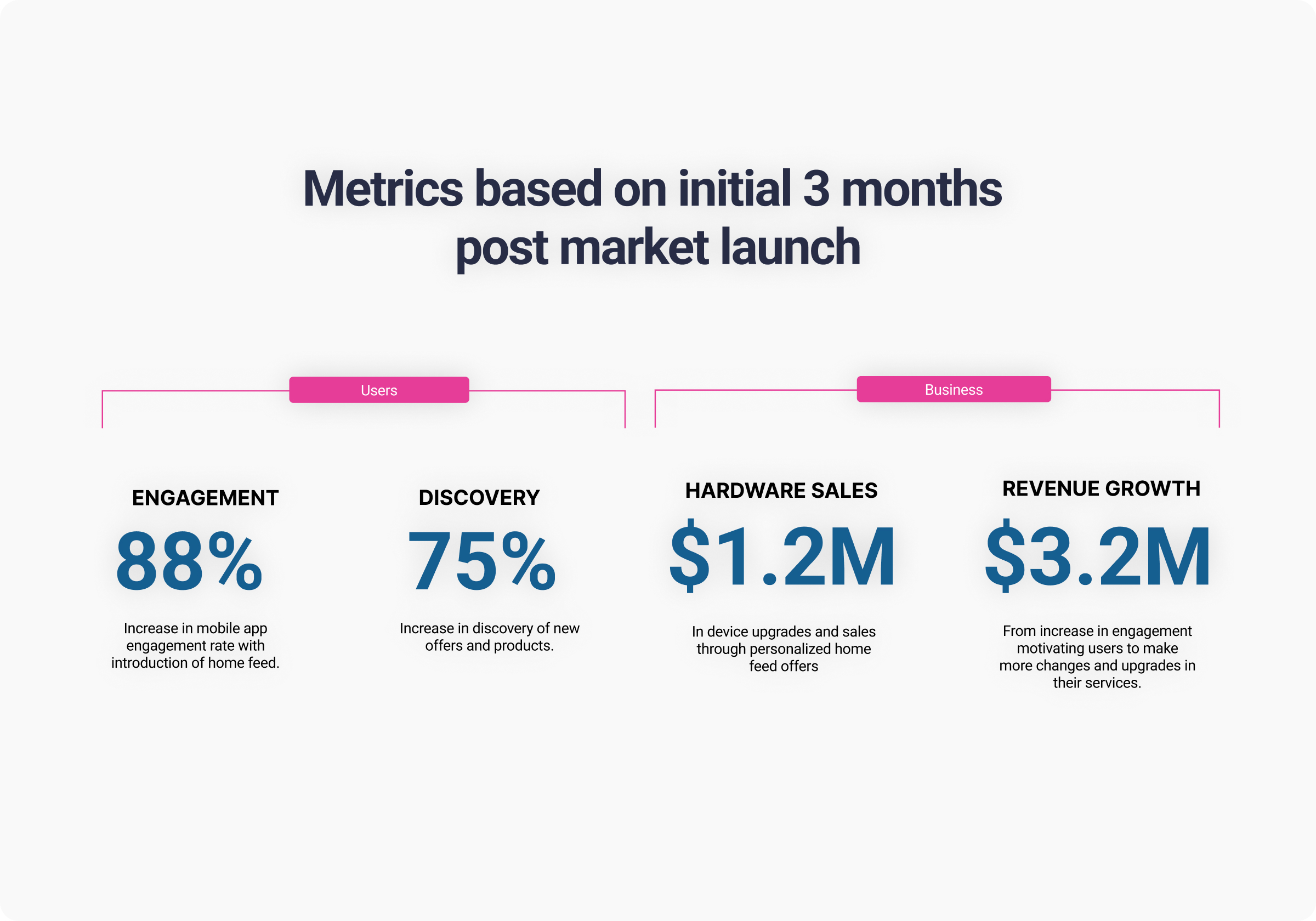
The personalized home feed initiative transformed Bell's app experience from a generic services screen into a personalized, account-aware interface—successfully bridging service discovery with business efficiency through personalization, onboarding, and engagement.
Measured Outcomes:
The success of the personalized home feed demonstrated that service discovery could be solved — not through more support staff, but through smarter, more personalized content design.
Through this initiative, we learned that effective personalized content design goes beyond surface-level recommendations. It requires account data integration, behavioural understanding, and contextual relevance. By aligning product, design, and engineering around a shared goal of personalized service discovery, we transformed generic content into account-aware experiences, reduced support dependency, and increased engagement. Account-based personalization, proactive onboarding, and behaviour-based recommendations proved essential in turning a fragmented service screen into an engaging, personalized home feed.
Generic content feeds can only go so far. True personalization requires account data—service subscriptions, usage patterns, viewing habits, and account history. During research, we learned that users expected the app to know their relationship with Bell and surface relevant content accordingly. By integrating account data into the personalization engine, we created a feed that felt tailored to each user's services and needs—significantly improving relevance and engagement. The key was making the landing screen feel like it was designed for each user's specific account, not a generic template.
Waiting for users to ask for help creates support burden. Proactive onboarding that surfaces when users subscribe to new services prevents confusion and reduces support calls. We designed the feed to automatically surface onboarding cards, setup guides, and usage tips when users subscribed to new services—guiding them through activation and configuration without requiring support intervention. This proactive approach transformed service onboarding from a reactive support task into a self-service, in-app experience—significantly reducing onboarding-related support calls and improving user satisfaction.
Relevance drives engagement. By analyzing viewing behaviour, service usage patterns, and engagement metrics, we surfaced personalized TV programming recommendations and service suggestions that matched each user's interests and habits. This behaviour-based approach increased content discovery, service usage, and overall engagement—transforming the feed from a passive content list into an active, engaging experience. The key was making content feel discovered, not pushed—enabling users to find relevant services and programming based on their behaviour rather than generic promotions.
Thanks to cross‑functional partners across product, research, engineering and operations.
Mentored 4 junior designers on accessibility testing and user research, perfecting their visual design craft and shaping them into confident contributors to future secure UX projects.