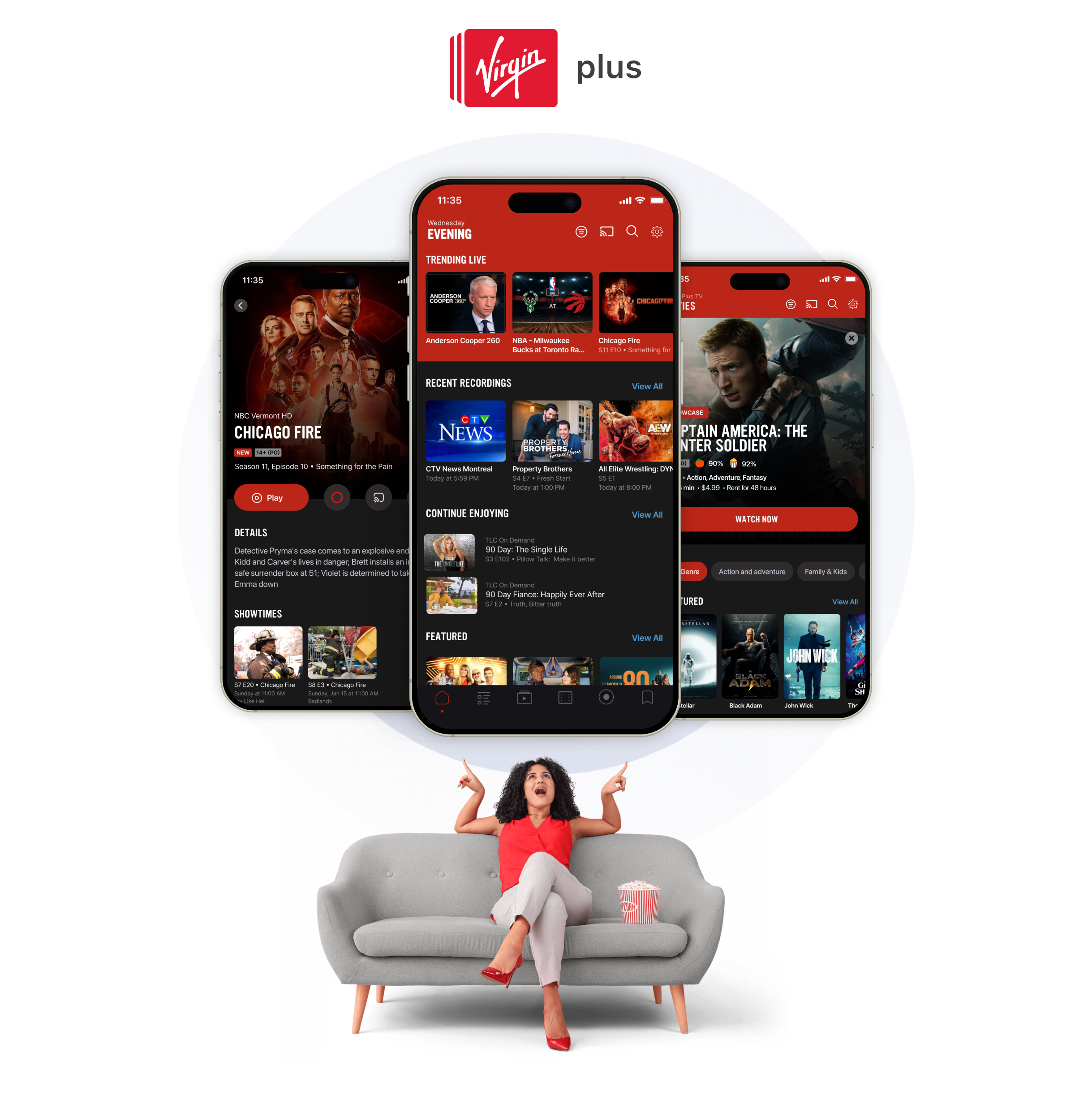
Virgin Plus, a subsidiary of Bell, is one of Canada’s leading telecommunications brands—offering mobile, internet, and now streaming services to millions of customers nationwide. As part of its broader digital expansion strategy, Virgin Plus set out to create a new TV streaming platform that would give members an all-in-one way to watch, discover, and manage entertainment across devices.
This initiative marked a major step forward for the brand: evolving from a mobile-first provider into a multi-service entertainment ecosystem. The goal was to design a seamless, modern experience that allowed users to stream content on-the-go through the mobile app or cast directly to their TV with minimal friction.
As Senior Product Designer, I was responsible for defining the end-to-end experience across both platforms—from early vision mapping and interaction design to ensuring accessibility, performance, and brand cohesion with the existing Virgin Plus ecosystem.
When the COVID-19 pandemic forced Canadians to stay at home, demand for streaming services surged dramatically. Virgin Plus recognized an opportunity to launch a new streaming service to meet this unprecedented need. Customers required both a TV streaming mobile app and a TV app—enabling them to discover content on mobile devices and seamlessly cast to their televisions. This dual-platform launch during a global pandemic required rapid development, intuitive design, and reliable streaming infrastructure to serve millions of customers seeking entertainment at home.
The Problem:
This was the launch of a new streaming service for Virgin Plus in Canada. Customers required a TV streaming mobile app and TV app. This was also launched during the COVID-19 pandemic when demand for streaming services was at an all-time high, and customers needed reliable access to entertainment from their homes.
I owned the end-to-end experience design for Virgin Plus TV's streaming service—designing both mobile and TV apps from scratch during the COVID-19 pandemic. Working alongside product managers, streaming engineers, and content strategists, I led the design workstream from discovery through launch, creating intuitive content discovery, seamless casting, and reliable streaming experiences that met unprecedented pandemic-driven demand.
Virgin Plus leadership recognized that the COVID-19 pandemic created an unprecedented opportunity to launch a new streaming service at a time when Canadians needed reliable access to entertainment at home. The streaming service initiative aimed to capture market share, drive customer acquisition, and establish Virgin Plus as a competitive player in the streaming landscape. Key business objectives included:
We benchmarked streaming experiences from leading platforms (Netflix, Disney+, Amazon Prime Video, Crave, CBC Gem) to inform a competitive, intuitive streaming UX. Key insights revealed that successful streaming apps prioritize content discovery, seamless casting, and reliable playback—enabling users to find content quickly and watch seamlessly across devices. We adapted these patterns to Virgin Plus's streaming service, creating a differentiated experience that matched user expectations while establishing Virgin Plus as a competitive streaming option in the Canadian market.
Interviews with 28 Virgin Plus customers during the pandemic revealed consistent patterns around streaming expectations:
These insights shaped our approach: creating an intuitive streaming experience with fast discovery, reliable casting, and seamless mobile-to-TV integration.
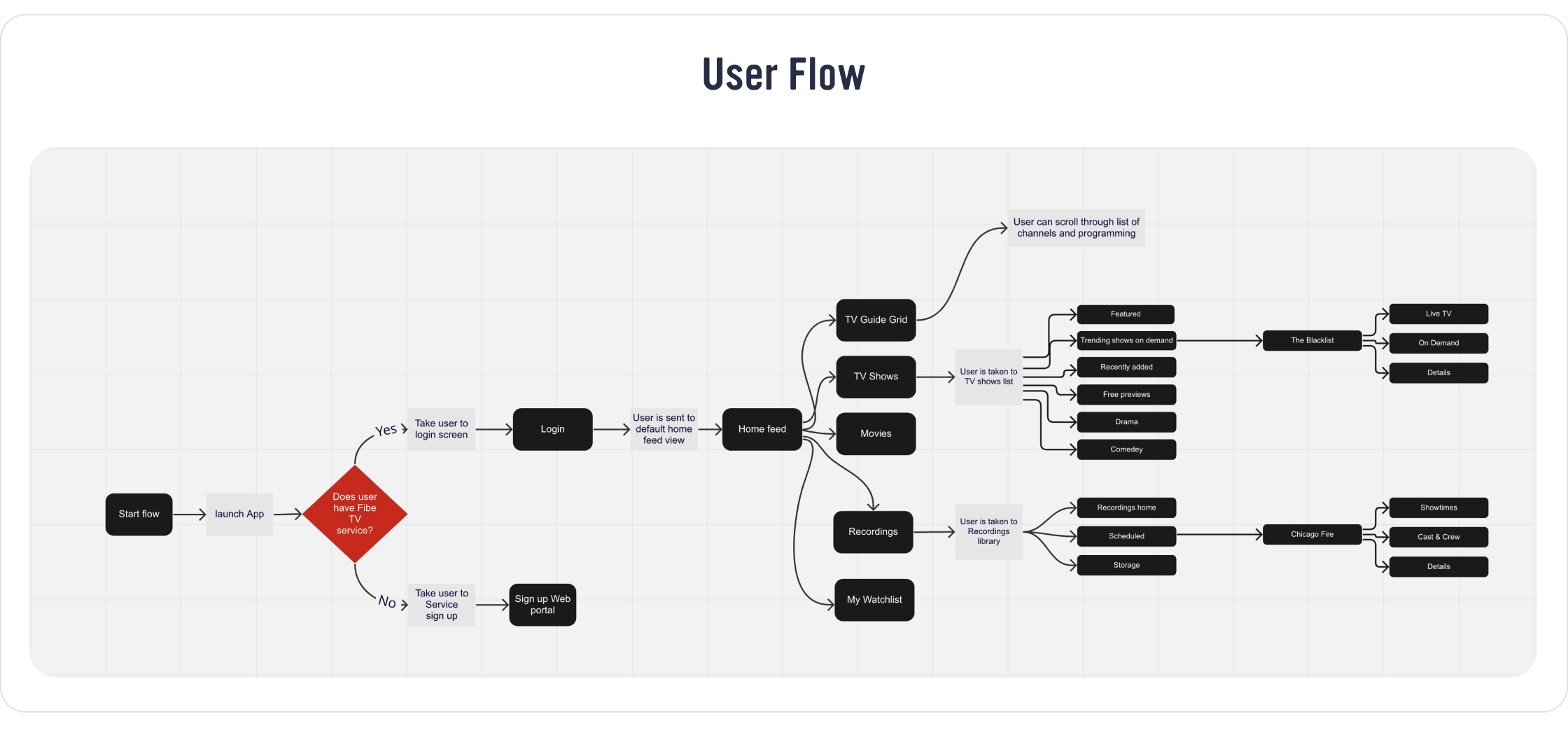
We designed Virgin Plus TV streaming apps for both mobile and TV platforms, creating an intuitive content discovery experience with seamless casting capabilities. The mobile app enables fast content browsing, search, and discovery, while the TV app provides optimized viewing with clear navigation. Seamless integration between platforms allows users to discover content on mobile and cast effortlessly to their televisions—creating a cohesive streaming experience that meets pandemic-driven demand for reliable home entertainment.
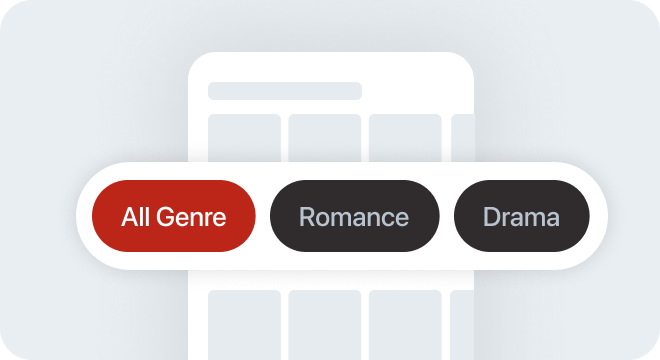
Design fast, intuitive content browsing with clear categories, search, and personalized recommendations. The mobile app enables users to discover shows, movies, and channels quickly reducing time to find content and increasing engagement.
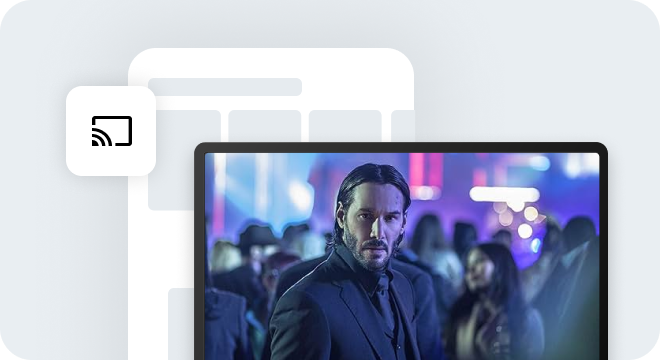
Enable one-tap casting from mobile to TV with reliable connectivity and clear status feedback. Users can discover content on mobile and cast instantly to their televisions, creating a seamless viewing experience without friction or delays.
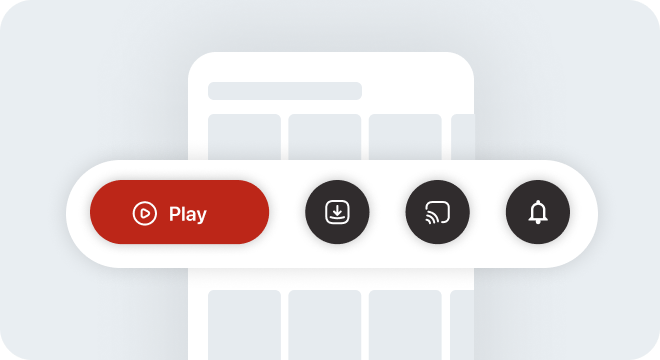
Empowering users with instant control over their viewing experience. Quick Actions provide one-tap access to essential features like Play, Download, Cast, and Watchlist, reducing friction and streamlining engagement. By surfacing the most frequent user intents directly in the content interface, viewers can act faster, whether starting playback, saving content for later, or casting to their TVwithout navigating through multiple menus.
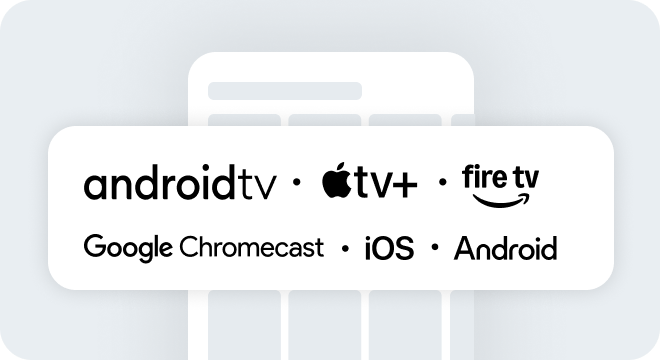
Maintain consistent design and functionality across iOS, Android, and TV platforms. Shared design patterns, navigation structures, and visual language create a cohesive experience—enabling users to seamlessly move between mobile and TV without learning new interfaces.
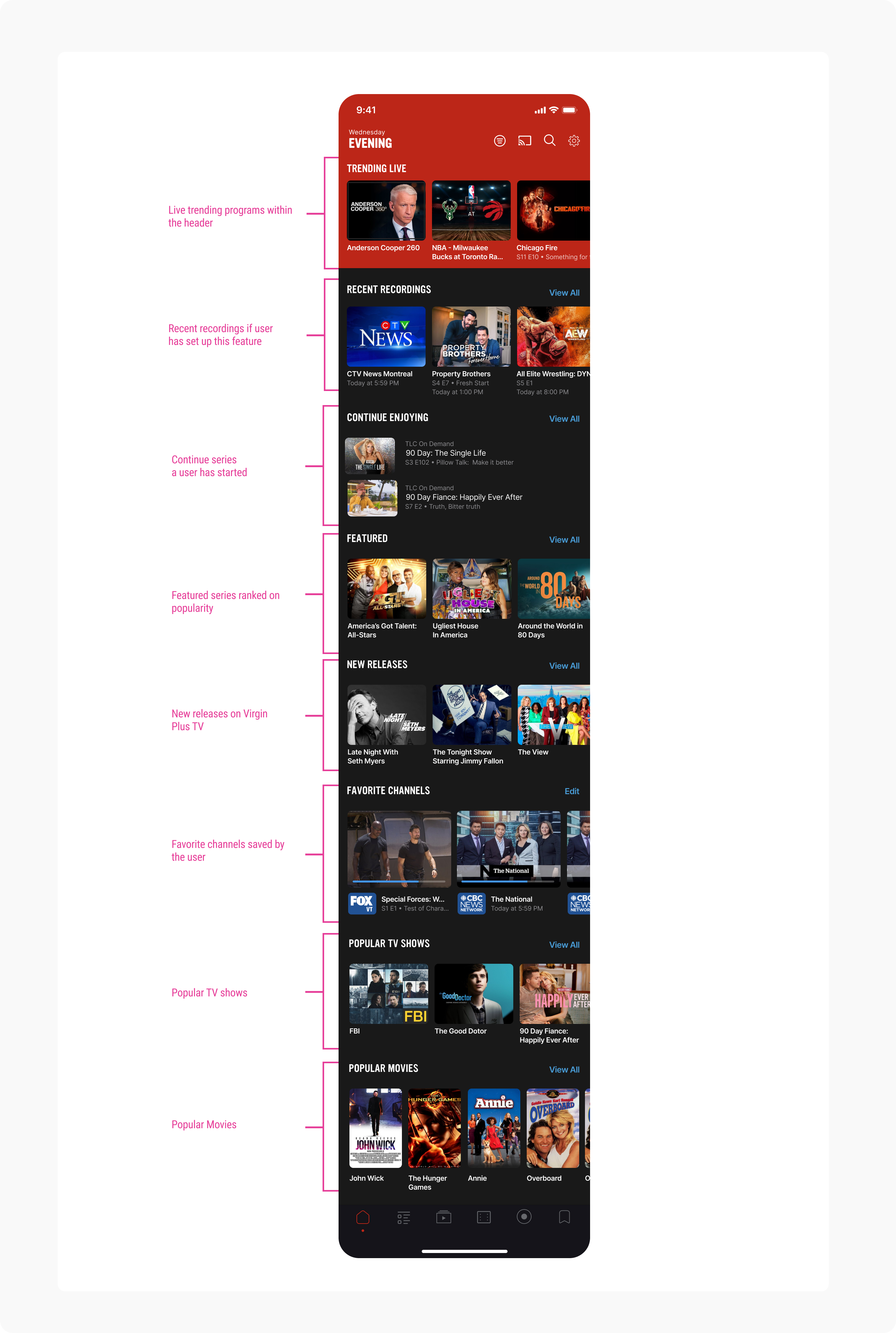 Solution 1: Designing the home screen
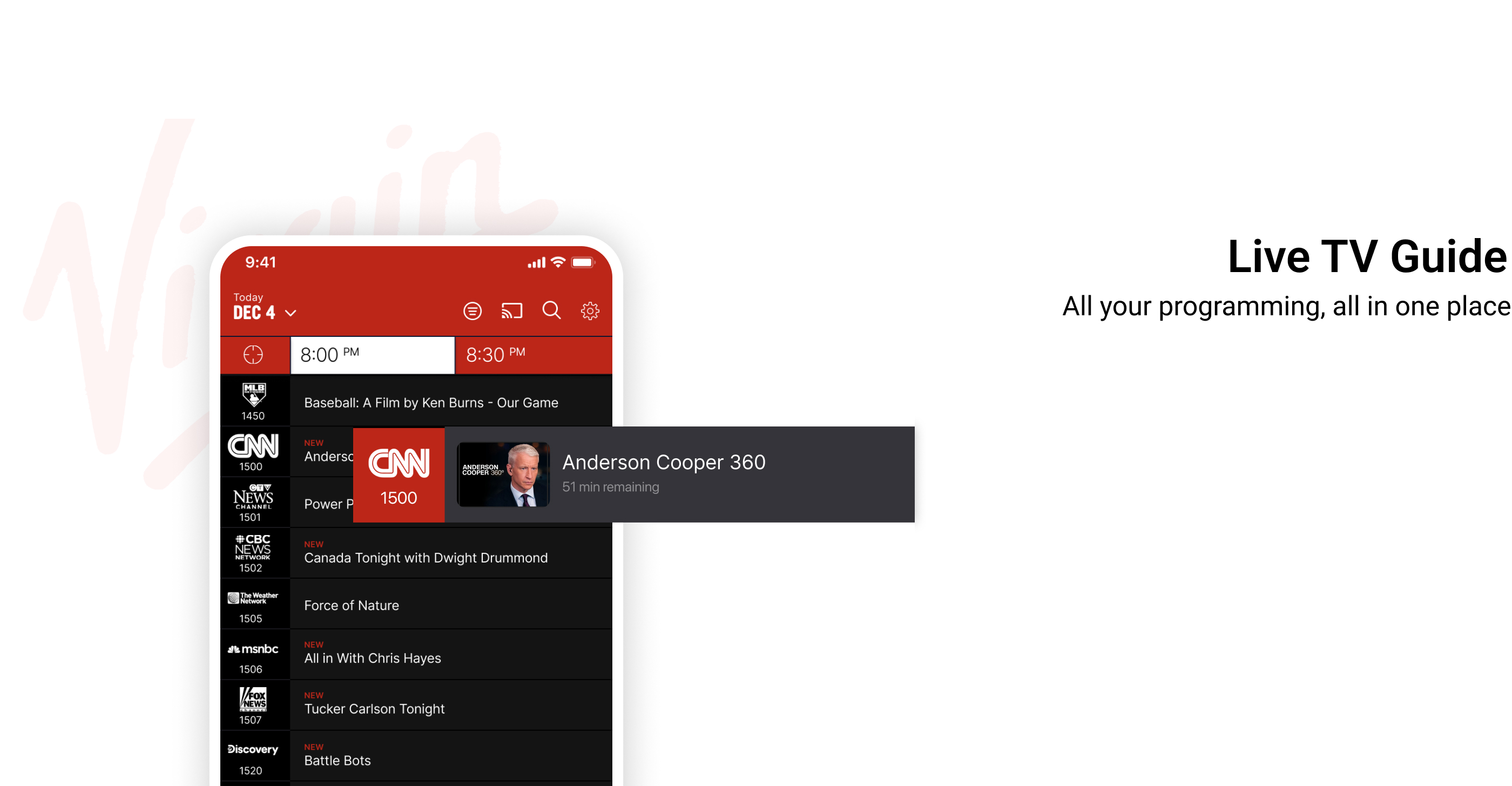
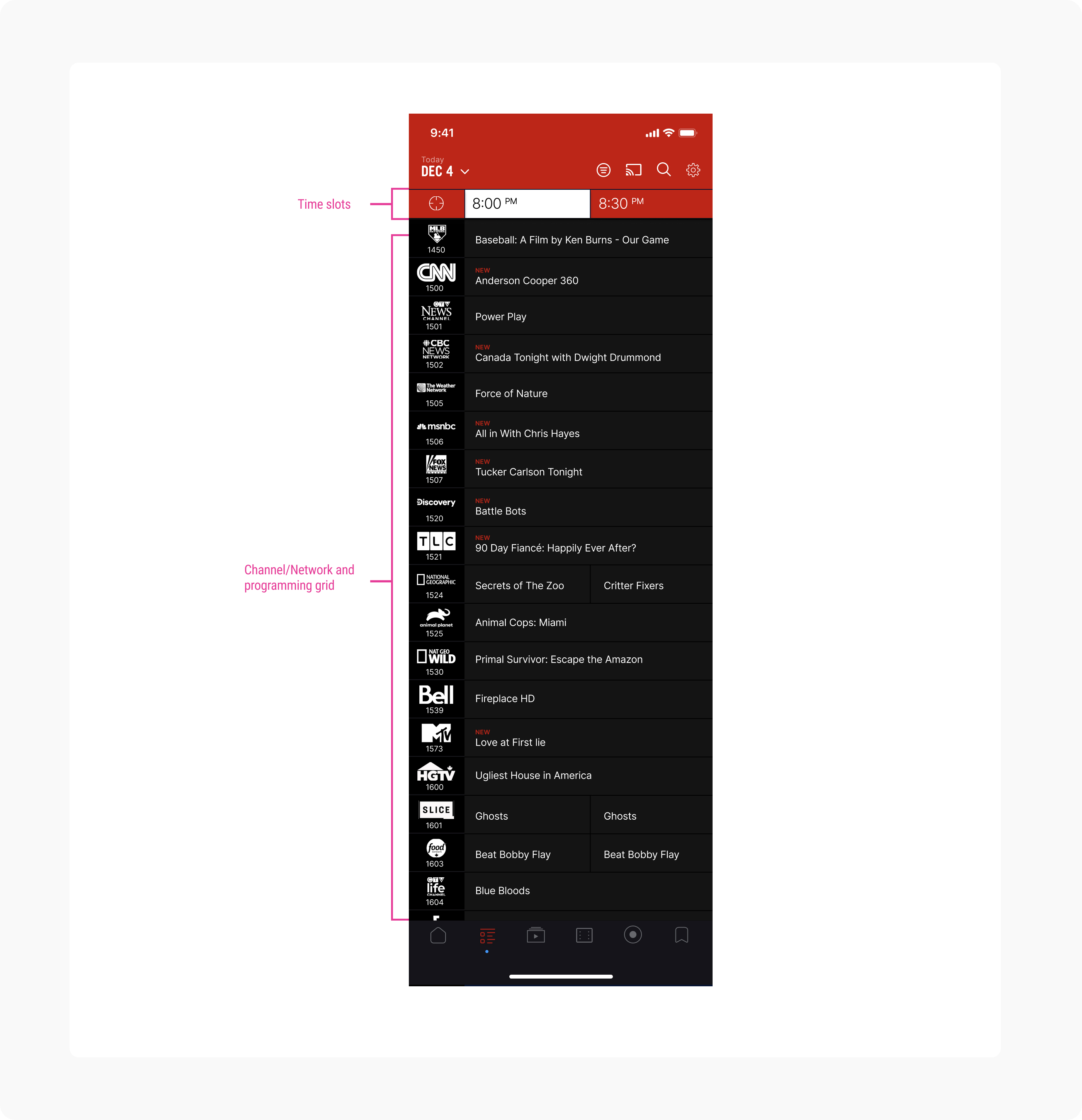 Solution 2: Designing the network, channel and programming grid
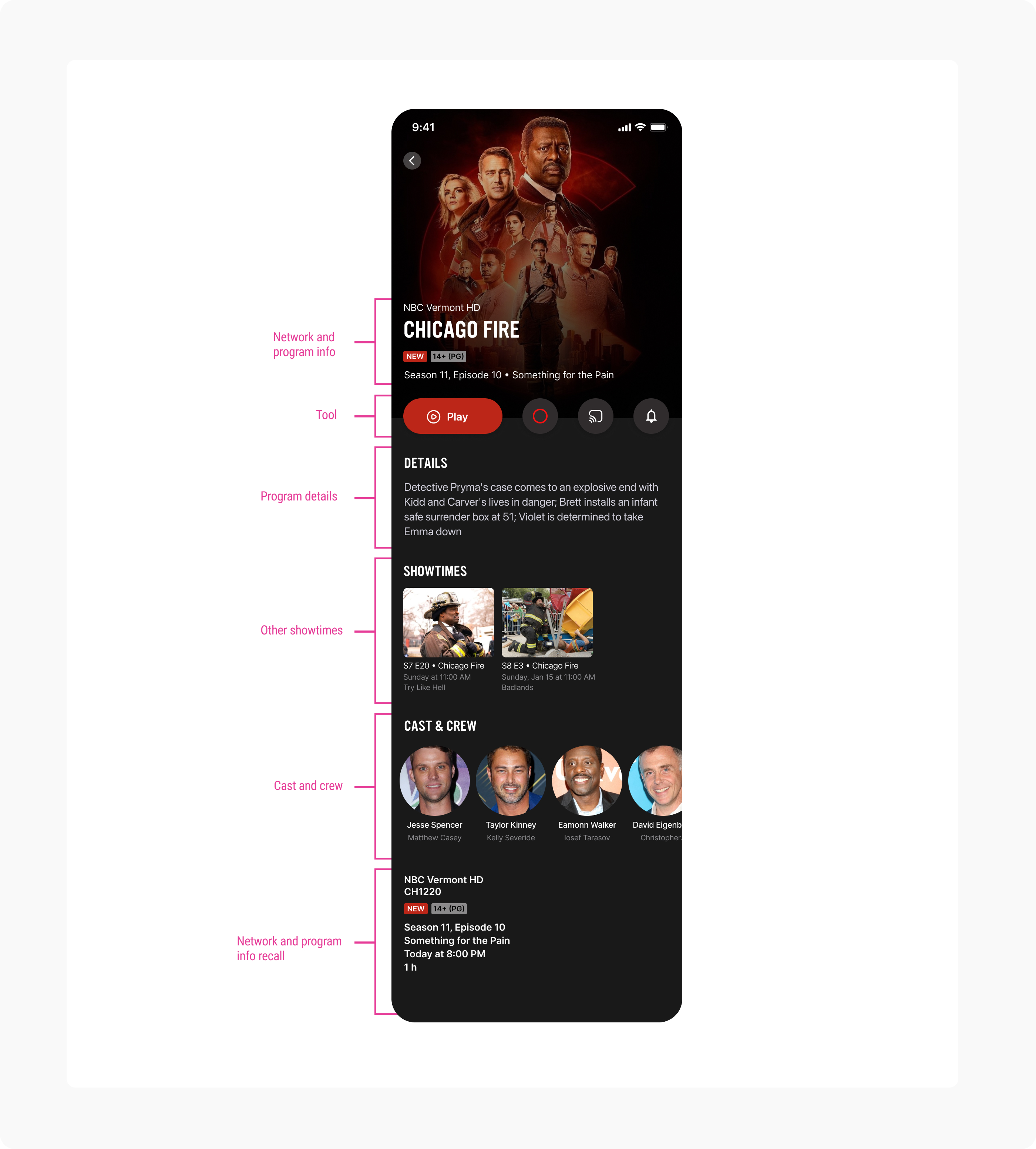 Solution 3: Designing the program details screen
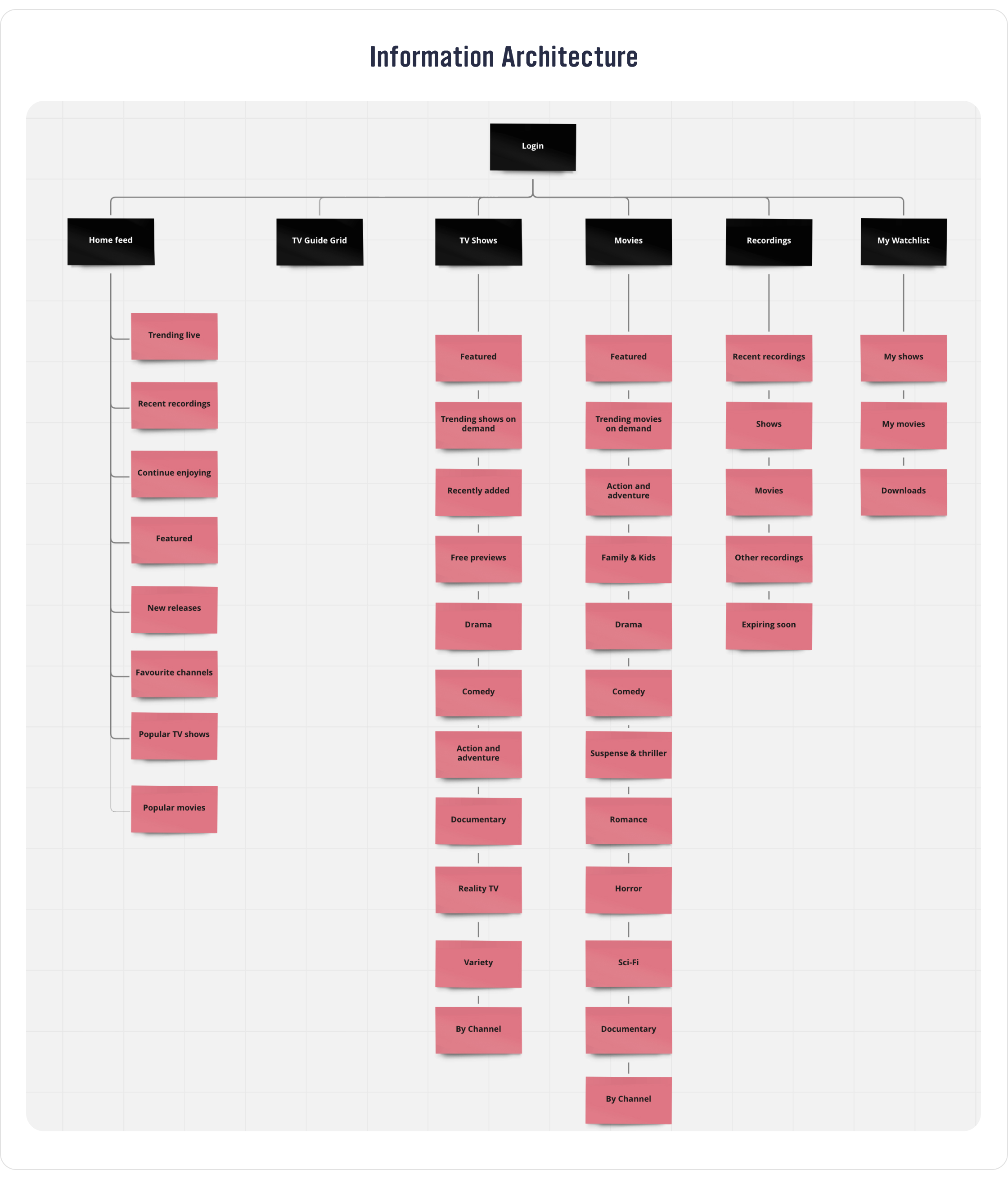
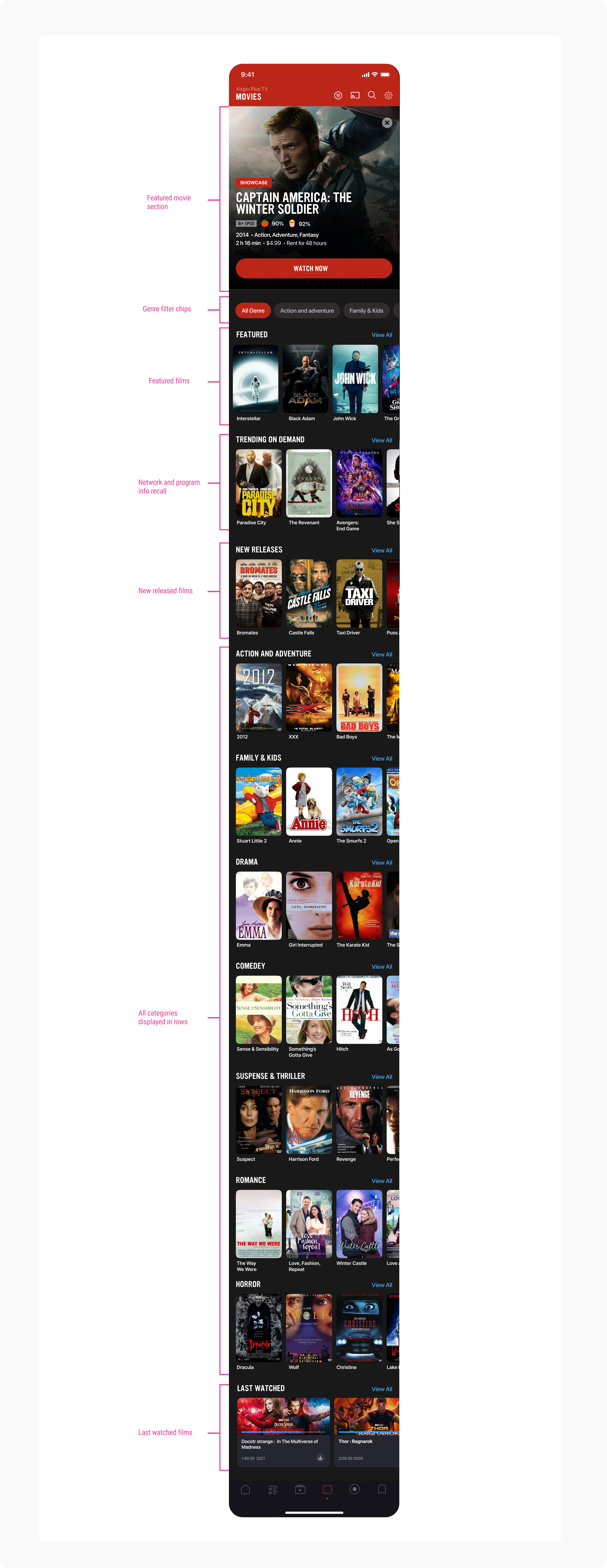 Solution 4: Designing the movie list and genres screenSolution 5: Designing the movie list and genres screen
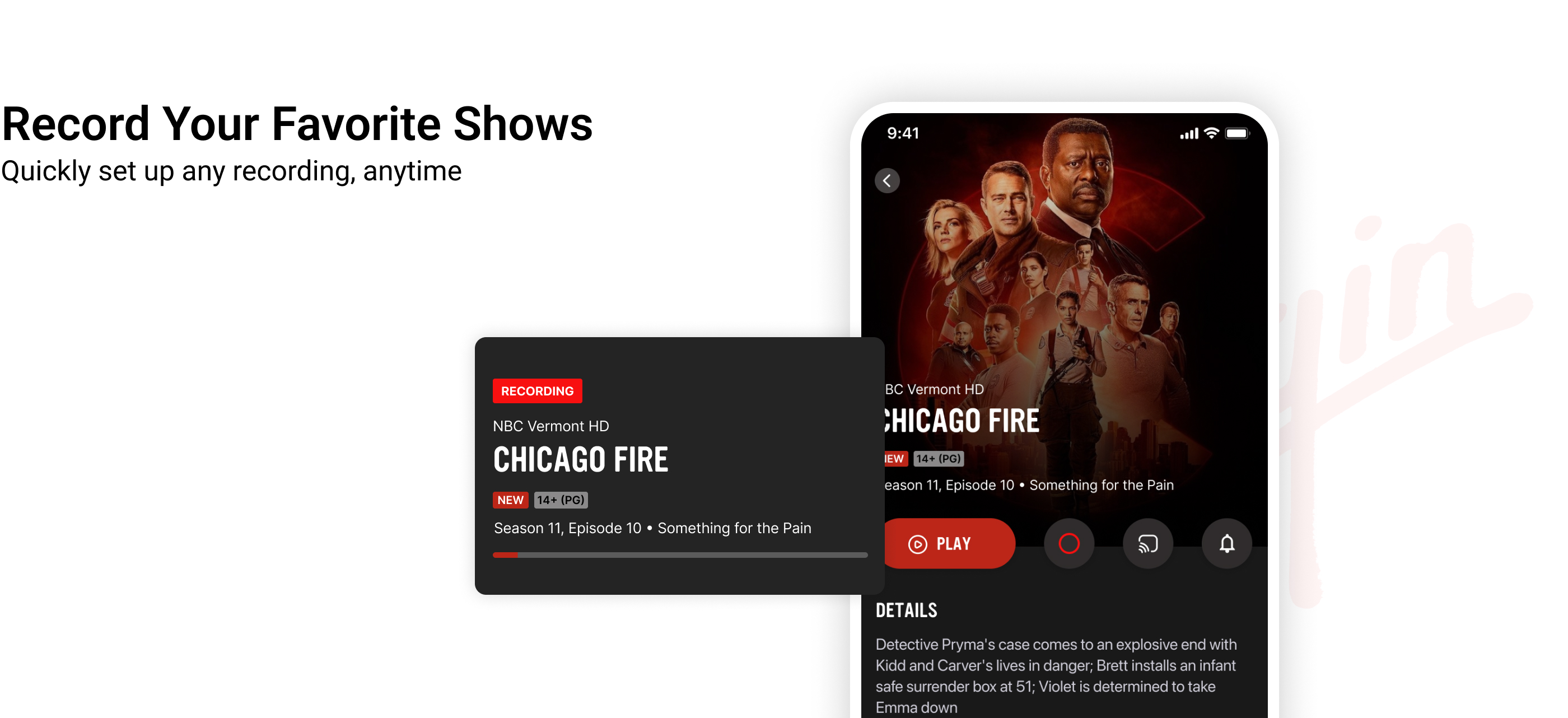
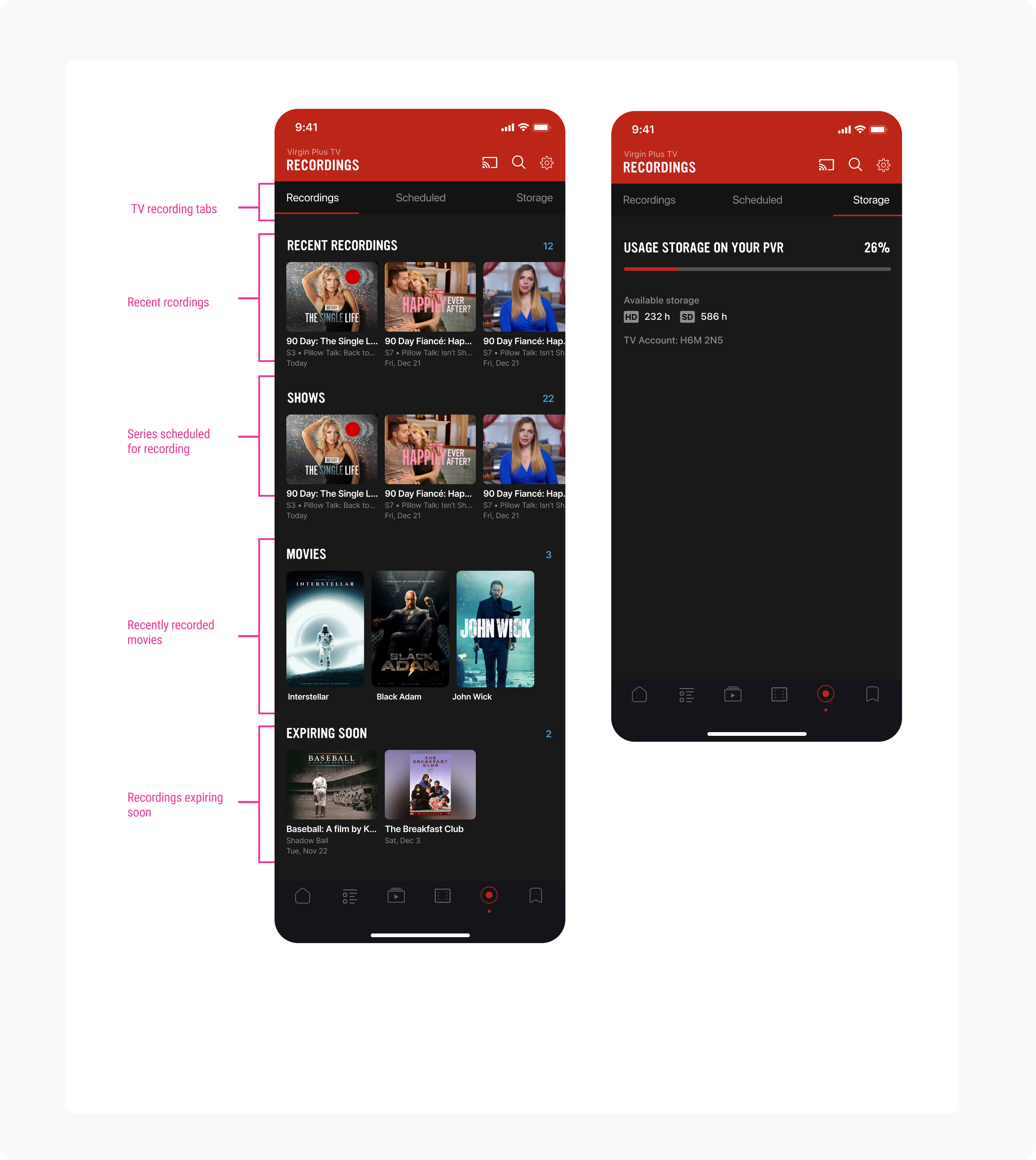 Solution 6: Designing the ability to record from the app
To extend the value of Virgin Plus TV beyond basic streaming, we designed a scalable streaming platform architecture that supported both mobile and TV apps with consistent content libraries, user profiles, and casting infrastructure. The platform enabled seamless synchronization between devices—allowing users to start watching on mobile and continue on TV, or vice versa, without losing their place.
The streaming architecture introduced personalized content recommendations, watch history tracking, and multi-device synchronization—helping users discover content they love and pick up where they left off across any device. By combining reliable streaming infrastructure, intuitive design, and seamless device integration, Virgin Plus TV transformed from a new streaming service into a competitive platform that met pandemic-driven demand for reliable home entertainment.
The Virgin Plus TV streaming service launch successfully established Virgin Plus as a competitive streaming provider in Canada—successfully bridging pandemic-driven demand with reliable streaming infrastructure and intuitive user experience.
Measured Outcomes:
The success of Virgin Plus TV demonstrated that streaming services could be launched successfully, not through longer timelines, but through smarter, user-centered design during unprecedented circumstances.
Through this initiative, we learned that launching a streaming service during a pandemic goes beyond feature parity. It requires fast discovery, reliable casting, and seamless platform integration. By aligning product, design, and engineering around a shared goal of intuitive streaming, we created dual-platform experiences that met unprecedented demand. Intuitive navigation, reliable infrastructure, and consistent design patterns proved essential in turning a new streaming service into a competitive platform during unprecedented circumstances.
Users have limited patience for complex content discovery. During research, we learned that users expected to find content within 30 seconds—any longer led to abandonment or frustration. By designing fast, intuitive search and category browsing, we reduced time-to-content and increased engagement. The key was making content discovery feel effortless—enabling users to find what they wanted quickly without navigating through multiple screens or menus.
Casting from mobile to TV can feel uncertain—users don't know if it's working until they see content on their TV. We designed clear casting status feedback, showing connection progress and casting success in real-time. This transparency reduced user anxiety and prevented abandonment during casting attempts. The key was making casting feel reliable and predictable—enabling users to cast with confidence and know exactly what was happening during the process.
Launching on multiple platforms (mobile iOS, Android, TV) required consistent design patterns and functionality. We designed a shared design system that enabled consistent experiences across platforms—allowing users to seamlessly move between mobile and TV without learning new interfaces. This cross-platform consistency reduced cognitive load and increased user confidence—proving essential in creating a cohesive streaming experience that felt unified, not fragmented.
Thanks to cross‑functional partners across product, research, engineering and operations.
Mentored 4 junior designers on accessibility testing and user research, perfecting their visual design craft and shaping them into confident contributors to future secure UX projects.