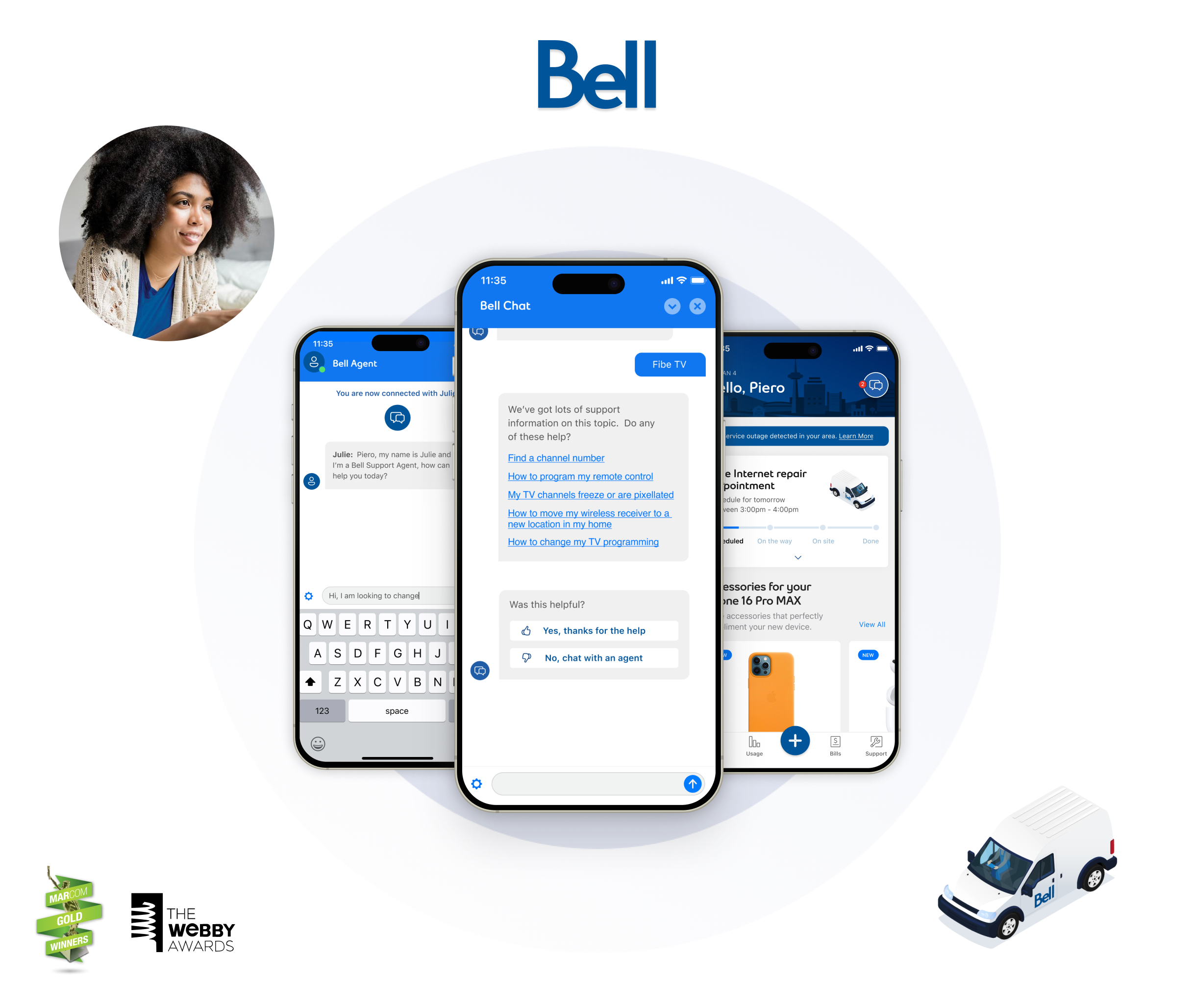
As customer support demand surged during the pandemic, Bell saw an opportunity to reduce strain on call centers by introducing a virtual assistant experience powered by conversational AI.
The initiative aimed to modernize Bell’s customer support ecosystem, providing users with faster answers, intuitive self-service flows, and human-like interactions across mobile and web.
As Senior Product Designer, I led the UX design for the AI-powered assistant, defining interaction patterns, tone, and escalation logic to balance automation with empathy. The goal was clear:
reduce support volume while improving accessibility, speed, and trust in Bell’s digital self-serve channels.
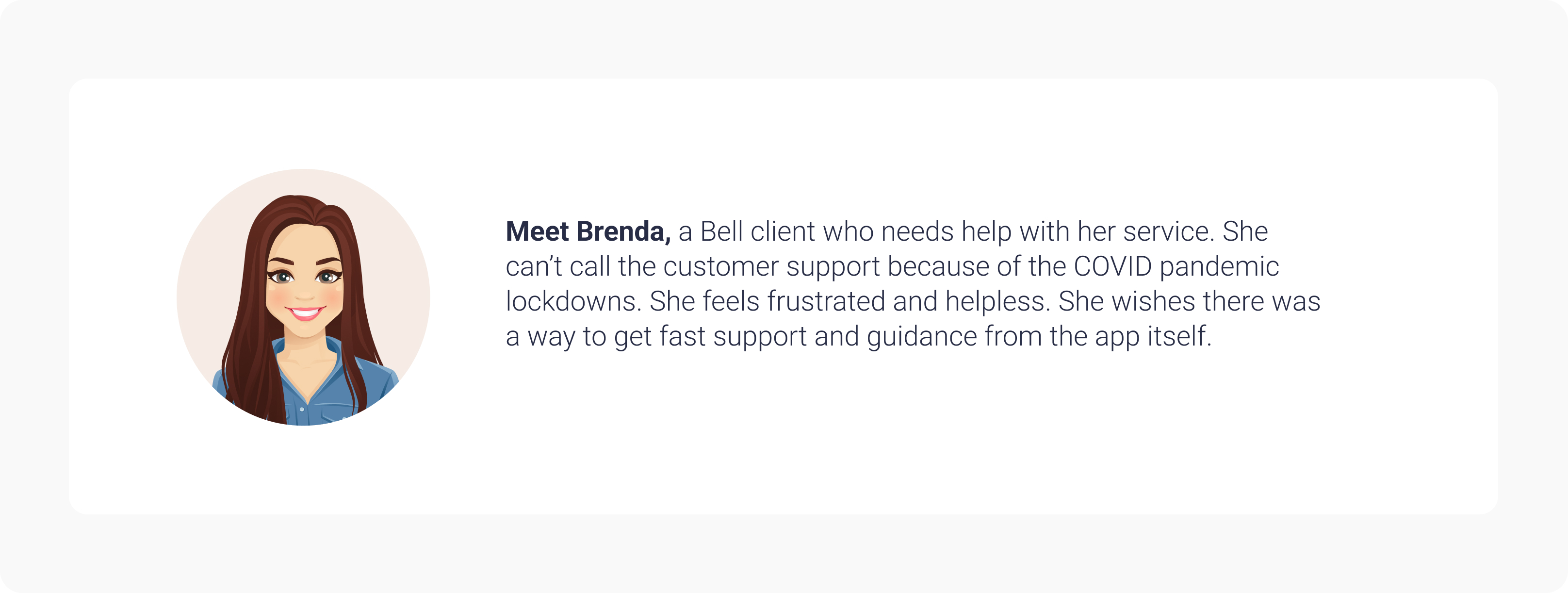
When the COVID-19 pandemic forced call center lockdowns and stay-at-home orders, Bell faced an unprecedented challenge: a surge in demand for TV and internet services from customers working and learning from home, combined with drastically reduced call center capacity. Support centers were overwhelmed, wait times stretched to hours, and customers became increasingly frustrated by their inability to get timely help—creating a crisis that threatened both customer satisfaction and business revenue.

User Problems:
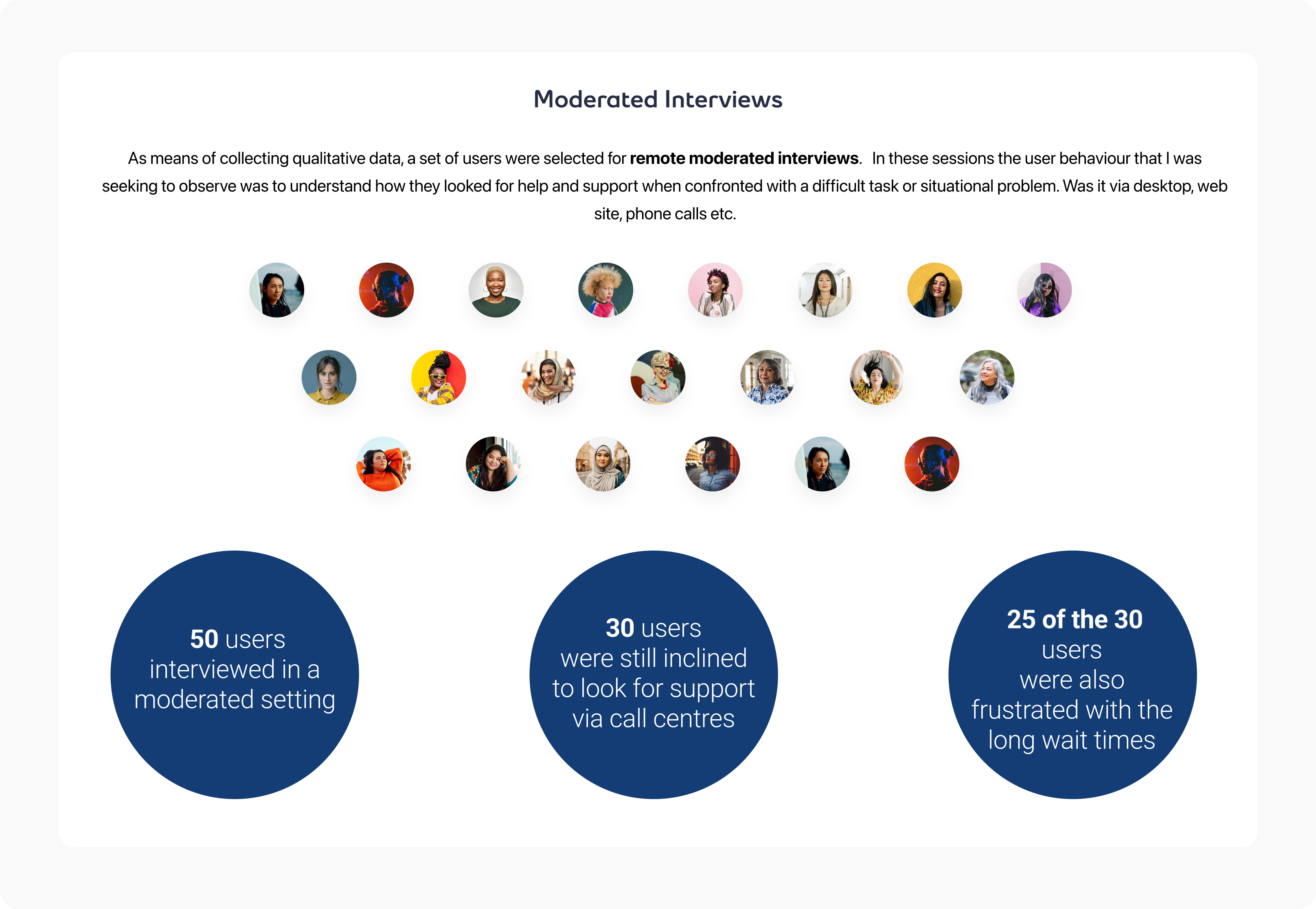
We had a serious problem. Our customer support was overwhelmed by the surge of new customers who were stuck at home and wanted TV and Internet services. We didn't have enough call centre agents to handle the calls and our customers became frustrated by the long waits.
Business Problem:
As a business the inevitable churn due to not being able to offer proper and quick support was costing the organization thousands in revenue losses.
I owned the end-to-end experience design for Bell's virtual assistant—an AI-powered conversational interface designed to handle support inquiries, service onboarding, and troubleshooting without human intervention. Working alongside product managers, AI/ML engineers, and content strategists, I led the design workstream from discovery through delivery, creating a virtual assistant that reduced call center load, improved response times, and prevented revenue loss from customer churn.
Bell's leadership recognized that the pandemic-driven support crisis was causing significant revenue loss through customer churn and service delays. The virtual assistant initiative aimed to transform support from a human-only bottleneck into an automated, scalable solution. Key business objectives included:
We benchmarked conversational AI experiences from leading technology companies (Amazon Alexa, Google Assistant, Apple Siri) and service platforms (banking chatbots, e-commerce assistants) to inform a more natural, effective virtual assistant experience. Key insights revealed that successful virtual assistants prioritize natural language understanding, context awareness, and graceful handoff to human agents when needed. We adapted these patterns to Bell's support ecosystem, creating a virtual assistant that could handle common inquiries while seamlessly escalating complex issues—transforming support from a crisis into a competitive advantage.
Interviews with 50 Bell customers and analysis of support ticket data during the pandemic revealed consistent patterns around support frustration:
These insights shaped our approach: creating a natural, conversational virtual assistant that provides immediate, effective support without human delays.
We designed a conversational virtual assistant that transforms support from a human-only bottleneck into an automated, scalable solution. The virtual assistant handles common inquiries, guides service onboarding, and provides troubleshooting support instantly—without wait times or human dependency. Through natural language understanding and context awareness, the assistant provides immediate answers while gracefully escalating complex issues to human agents when needed.
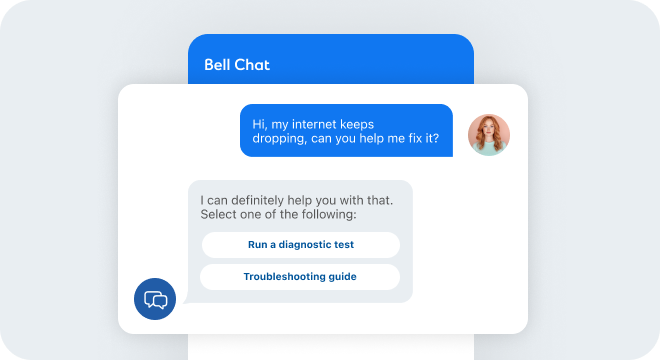
Enable users to ask questions in their own words, not rigid menu options. The assistant understands intent from conversational input, making support feel natural and human-like rather than robotic or scripted.
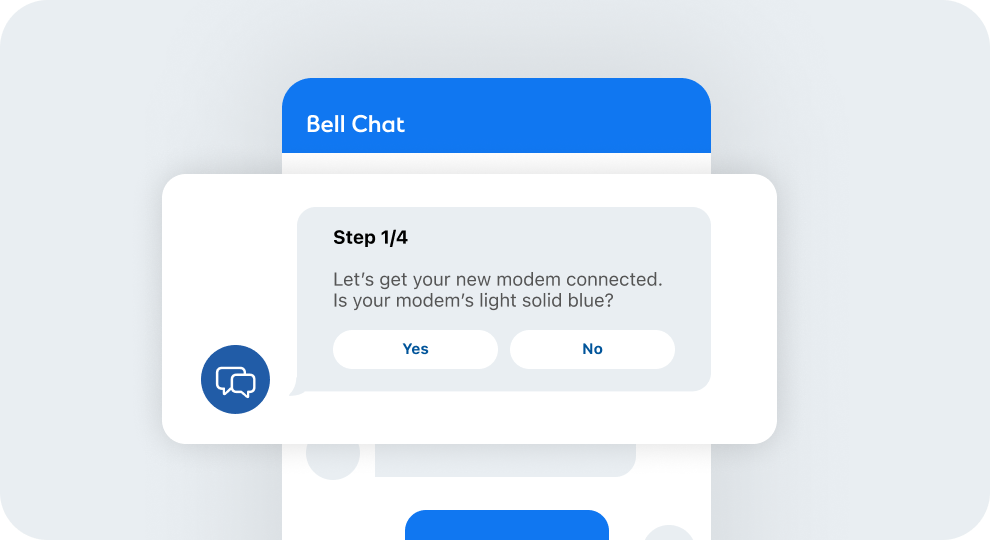
Guide new customers through service setup step-by-step. The assistant helps customers activate services, configure equipment, and troubleshoot initial setup issues, reducing the need for human agent intervention and preventing service delays.
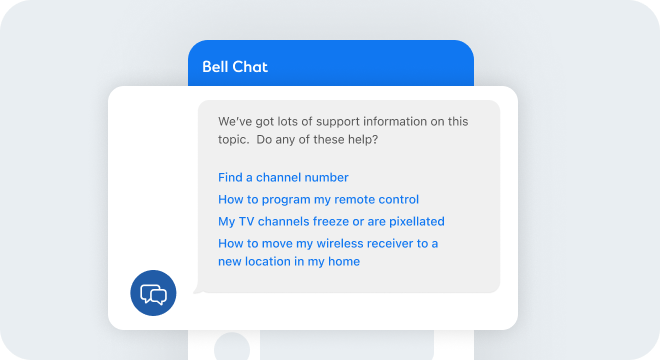
Leverage account data and service history to provide personalized troubleshooting. The assistant understands the user's services, recent activities, and common issues to offer relevant, actionable solutions without asking for context the system already knows.
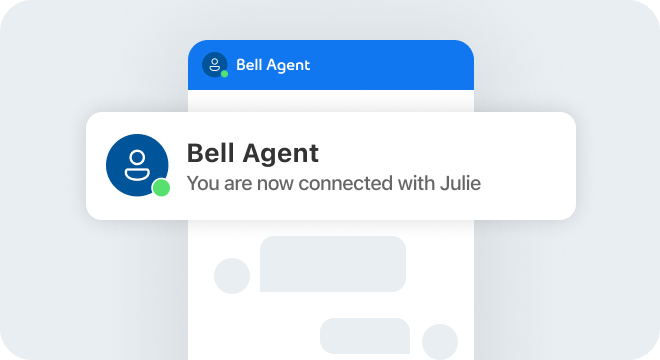
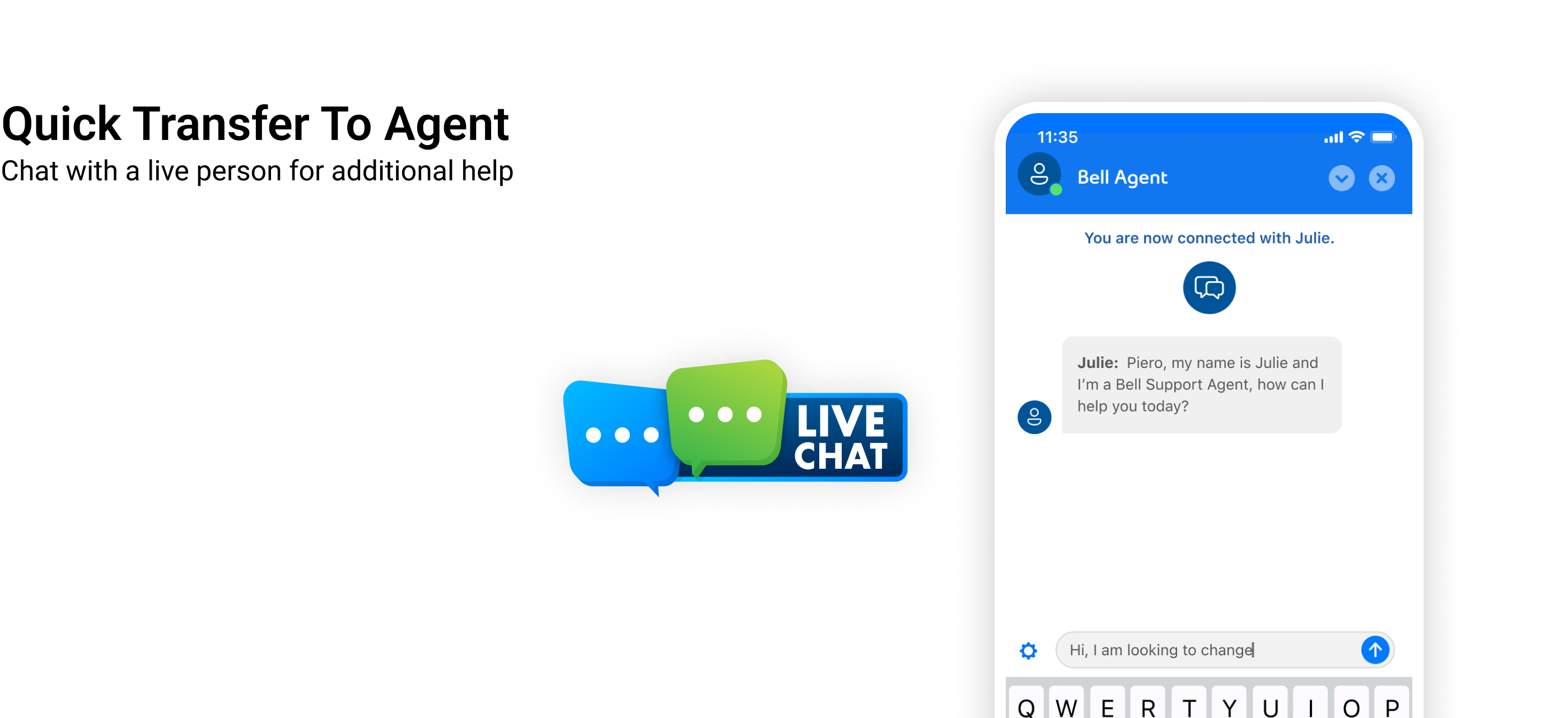
When the assistant can't resolve an issue, it smoothly transitions to a human agent with full context. The handoff preserves conversation history, account details, and attempted solutions, enabling agents to pick up where the assistant left off without repeating information.
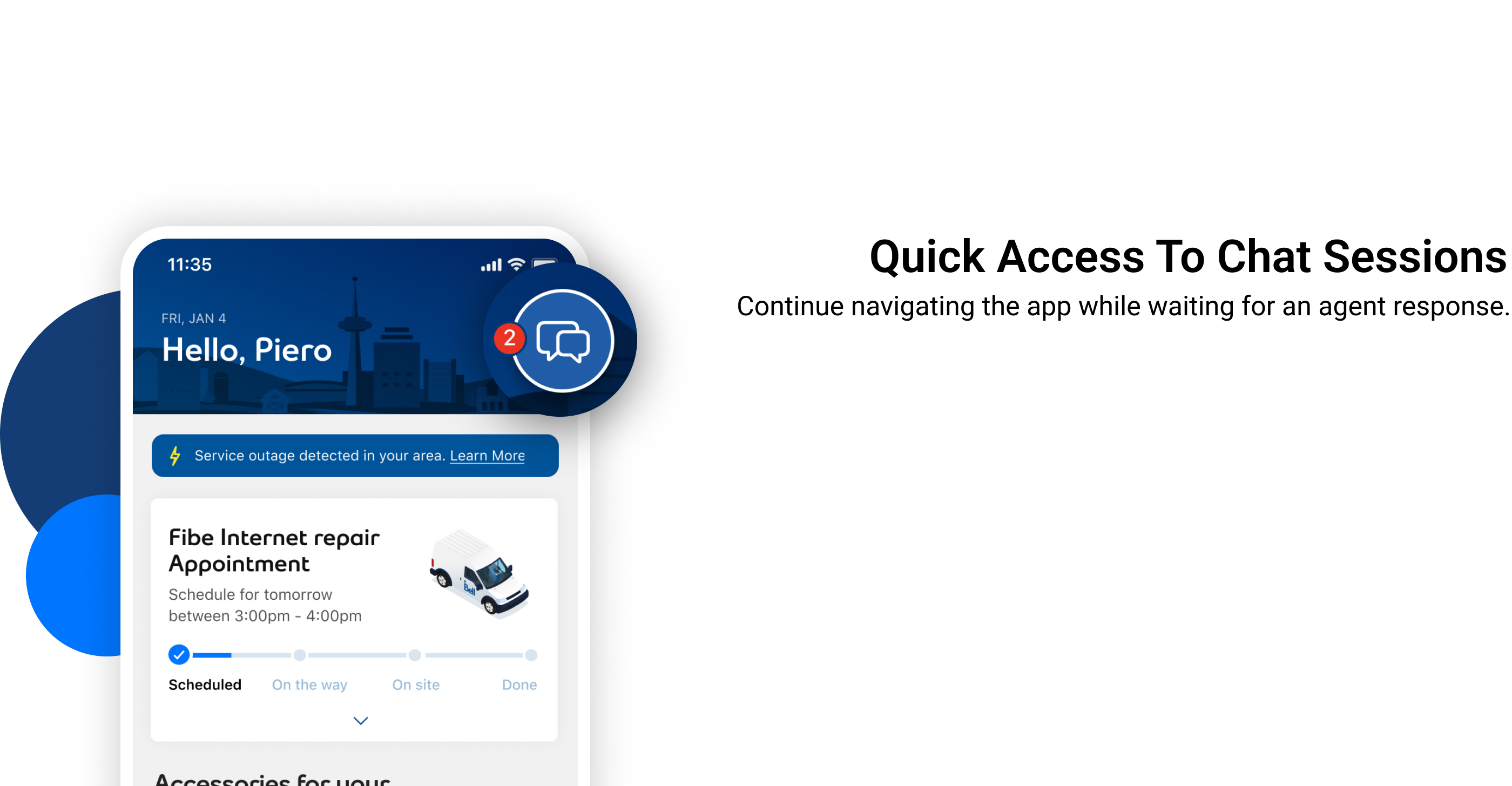
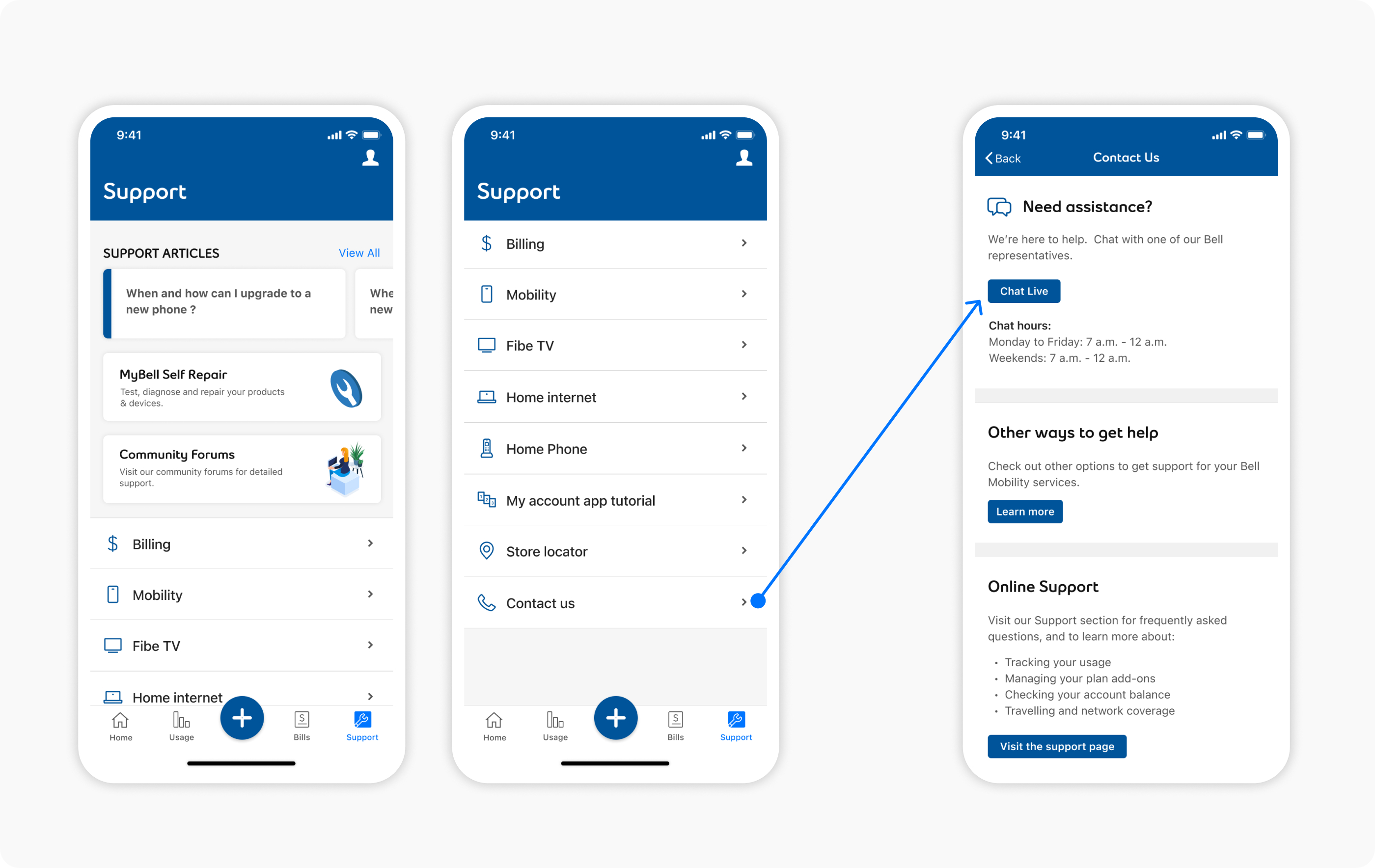 Defining the entry point
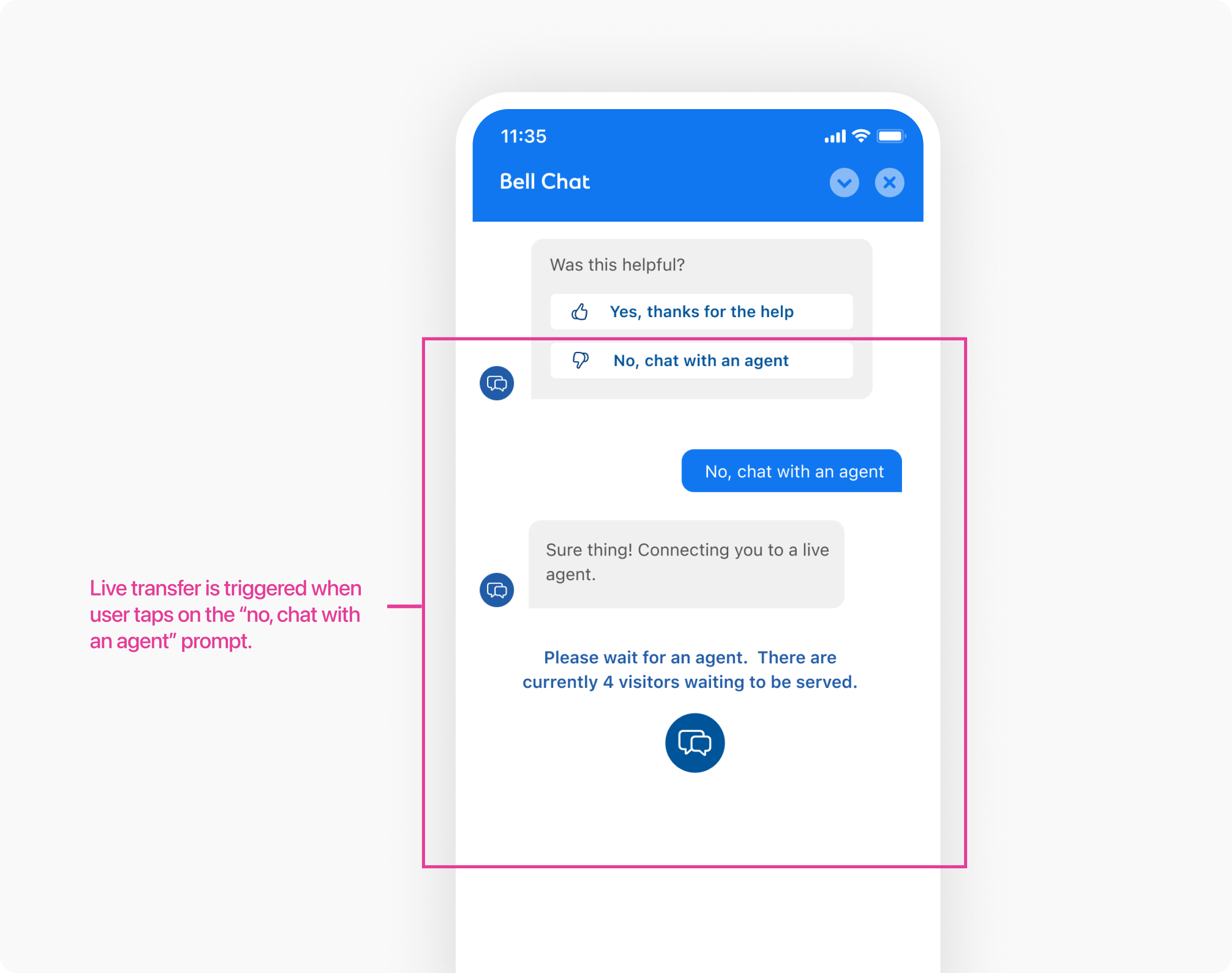 Transfer to a live Bell agent
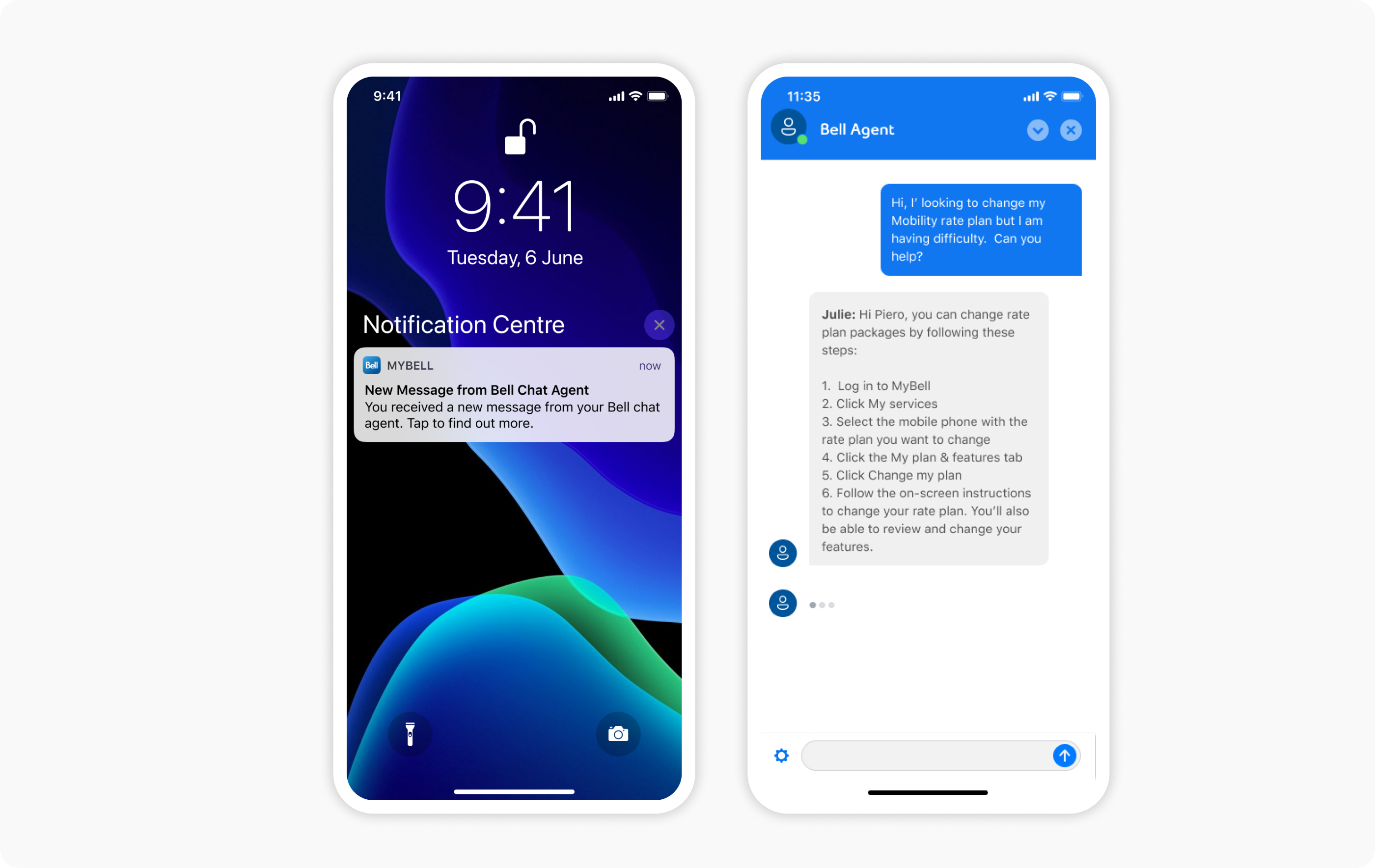 Leveraging Push notifications
To extend the value of the virtual assistant beyond simple Q&A, we designed an intelligent conversation engine that learns from user interactions and improves over time. The architecture supports multi-turn conversations, context preservation, and intent recognition—enabling the assistant to handle complex support scenarios without human intervention.
The conversational AI engine introduced sentiment analysis, proactive suggestions, and predictive problem-solving—helping the assistant anticipate user needs and offer solutions before users even ask. By combining natural language processing, machine learning, and human-centered design, the virtual assistant transformed support from a reactive service into a proactive, always-available solution that reduces wait times and improves customer satisfaction.
The virtual assistant initiative transformed Bell's support experience from a human-only bottleneck into an automated, scalable solution—successfully bridging support demand with business efficiency through AI-powered assistance and seamless human handoff.
Measured Outcomes:
The success of the virtual assistant demonstrated that support crises could be solved — not through more call center agents, but through smarter, AI-powered support design.
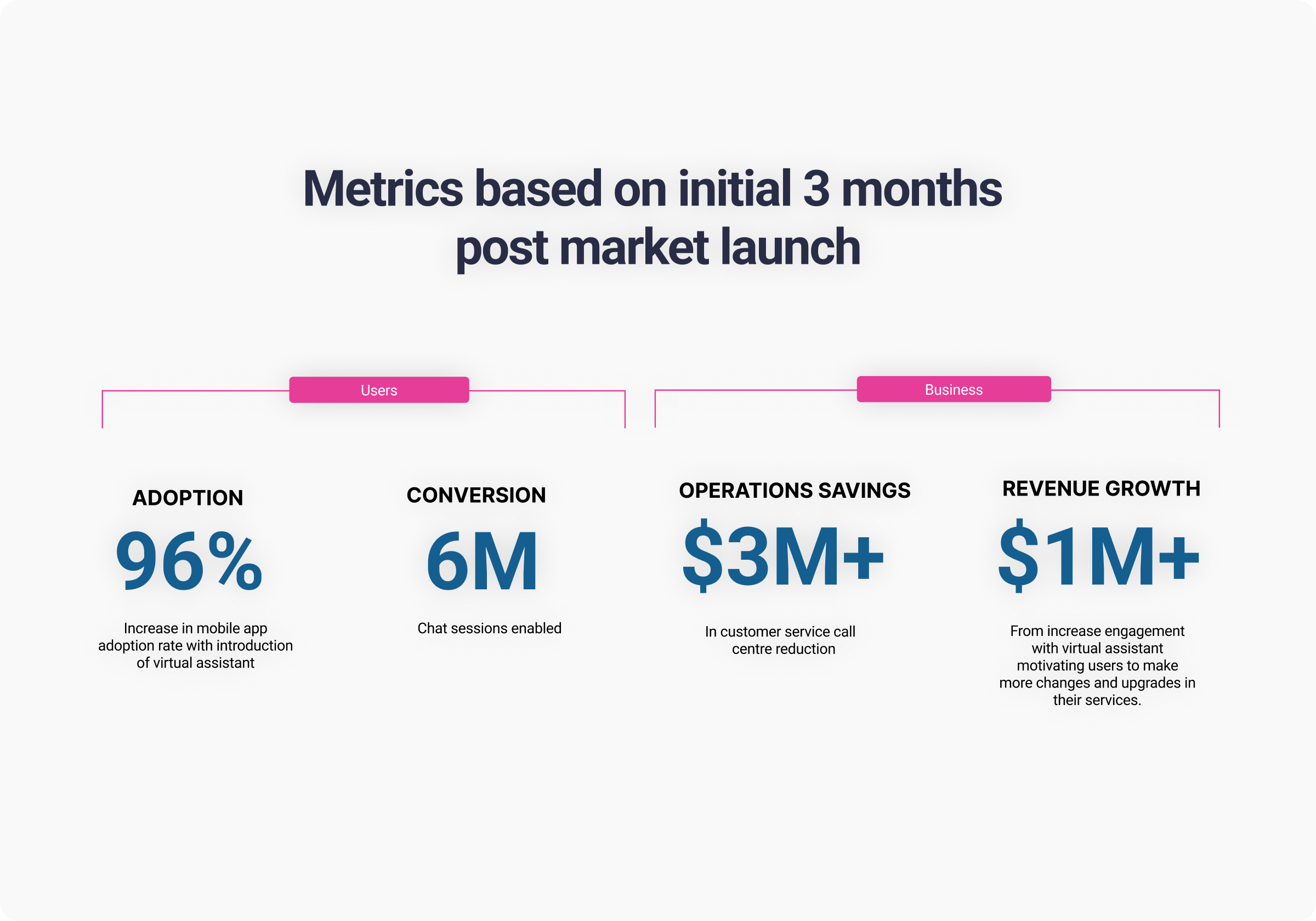
Through this initiative, we learned that effective virtual assistant design goes beyond chatbot technology. It requires natural language understanding, context awareness, and graceful human handoff. By aligning product, design, and engineering around a shared goal of immediate, effective support, we transformed support from a human-only bottleneck into an automated, scalable solution. Conversational design, context preservation, and seamless escalation proved essential in turning a support crisis into a competitive advantage.
Users hate IVR menus and rigid button flows. During research, we learned that users preferred asking questions in their own words rather than navigating through structured menus. By designing for natural language understanding instead of menu hierarchies, we created a virtual assistant that felt human-like and conversational rather than robotic or scripted. The key was understanding intent from conversational input—enabling users to ask "Why is my bill higher?" instead of navigating through "Billing" → "Bill Inquiry" → "Bill Changes" menus.
Single-turn conversations can only solve simple problems. Multi-turn conversations with context preservation enabled the assistant to handle complex support scenarios that required multiple steps or clarifications. By remembering previous messages, account details, and attempted solutions within a conversation, the assistant could guide users through service onboarding, troubleshooting, and issue resolution without asking for information it already knew. This context awareness significantly improved resolution rates and user satisfaction.
No virtual assistant can solve every problem. When the assistant couldn't resolve an issue, graceful handoff to human agents became critical. We designed handoff workflows that preserved conversation history, account context, and attempted solutions—enabling agents to pick up where the assistant left off without repeating information. This seamless transition prevented user frustration from having to start over and ensured complex issues reached human agents with full context—significantly improving resolution times and customer satisfaction.
Thanks to cross‑functional partners across product, research, engineering and operations.
Mentored 3 junior designers on accessibility testing and user research, perfecting their visual design craft and shaping them into confident contributors to future mobile-first UX projects.