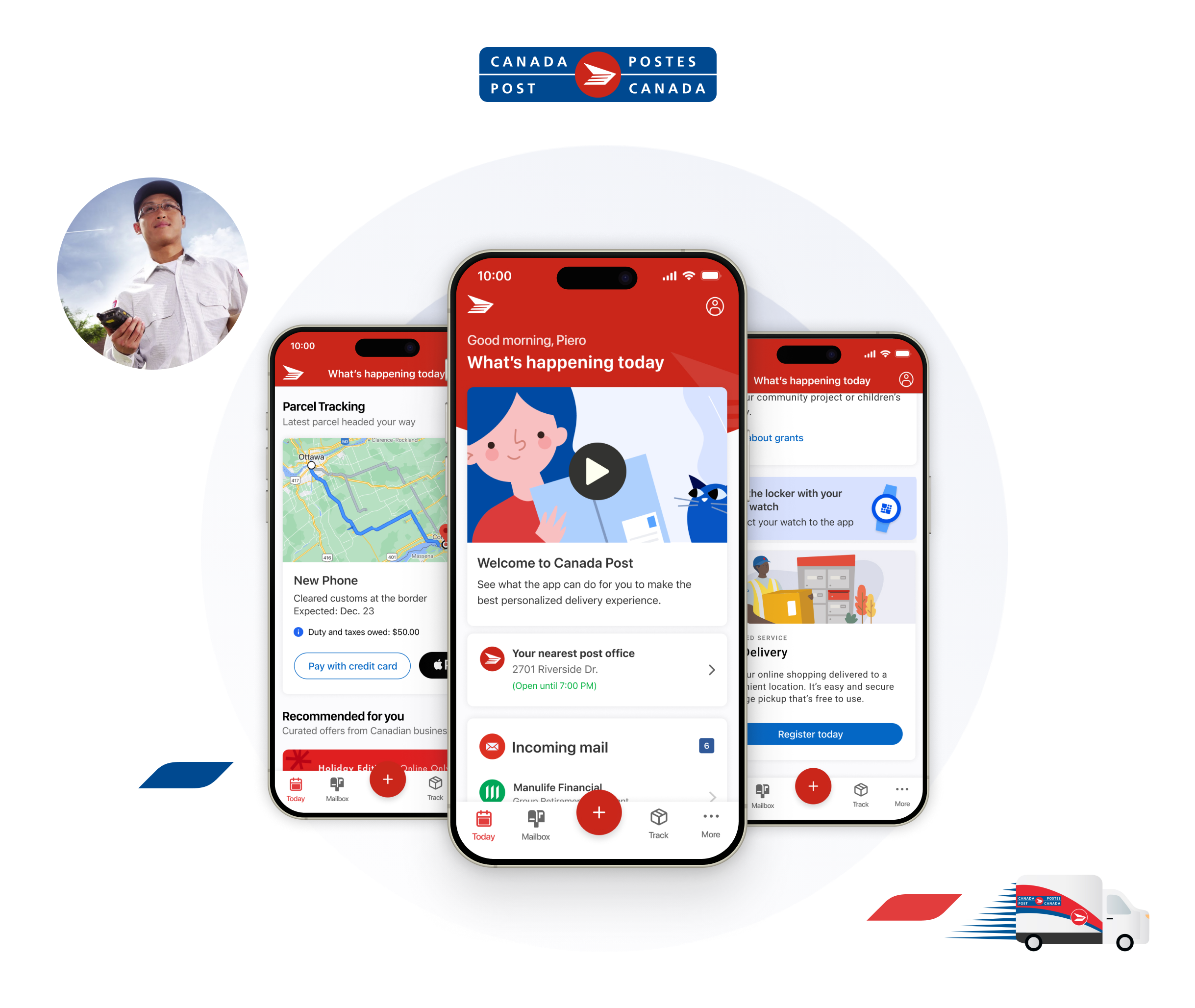
Canada Post offers a wide range of digital tools and services—package tracking, identity verification, business shipping, mail redirection, and more. Yet most Canadians only opened the app for one reason: tracking parcels.
Despite its scale, the platform lacked visibility into other valuable offerings. These tools were hidden behind complex secondary navigation and static menus that didn’t adapt to the user’s needs or behaviors. For millions of Canadians, discovering other services felt accidental, not intentional.
Canada Post offers a wide range of digital services—from package tracking and mailbox management to identity verification and business tools. However, users primarily accessed the app for a single purpose: tracking packages. Other valuable services and product offerings were hidden deep within secondary navigation, making discovery nearly impossible. This lack of visibility created missed opportunities for both users and the organization.
Several reasons motivated this initiative. The most pressing challenge was the lack of visibility users had into Canada Post’s broader ecosystem of products and services. This not only limited user engagement but also capped potential revenue from existing digital offerings..
User Frustrations:
The Business:
The lack of visibility and discoverability of these services does not maximize potential profits the corporation could be gaining.
This combination of user frustration and business underperformance created a clear design opportunity:
| How might we surface personalized, relevant information and services to every user, making the Canada Post app feel helpful, human, and valuable beyond tracking packages? |
I owned the end-to-end experience design for Canada Post's Today feed—a personalized, content-driven homepage designed to surface products and services at the right moment. Working alongside product managers, content strategists, and engineering teams, I led the design workstream from discovery through delivery, creating a feed that transformed how users discover and engage with Canada Post services.
Instead of treating the app as a utility, I envisioned it as a daily companion, one that delivers timely updates, reminders, and service recommendations tailored to each user’s context.
The Today Feed concept unified package tracking, personalized insights, and promotional service discovery into a single, dynamic entry point. By meeting users where they are with the information they actually care about, we turned one-time interactions into ongoing engagement.
Canada Post's leadership recognized that the app's single-purpose usage pattern limited revenue potential and user value. The Today feed initiative aimed to transform the app from a package-tracking utility into a comprehensive service hub. Key business objectives included:
I benchmarked personalized feed patterns from leading consumer apps Instagram, TikTok, Spotify, and service platforms like Amazon, Google Home, Apple home. Key insights revealed that successful discovery experiences rely on personalized content curation, contextual relevance, and progressive disclosure. I adapted these patterns to Canada Post's unique service ecosystem, creating a feed that surfaces relevant services at the right moment based on user behavior, location, and service history.
Interviews with 32 active Canada Post app users revealed consistent patterns around service discovery:
These insights shaped our approach: creating a dynamic, personalized feed that proactively surfaces relevant services and content.
From static menus to a living, adaptive homepage
My early design explorations focused on how to make the home screen feel alive, not just a gateway for tracking packages. I moved away from the traditional dashboard layout toward a modular feed, where each card dynamically adapts to user behavior and needs.
I tested various interaction patterns to balance information density with clarity:
Usability testing showed that users spent 35% more time on the home screen when service content was integrated directly into their daily flow, proof that relevance and simplicity drive engagement.
I designed a dynamic, personalized homepage feed that transforms service discovery from passive navigation into proactive, context-aware recommendations. The Today feed surfaces relevant Canada Post services, tips, updates, and personalized content based on user behavior, location, and service history, turning hidden services into discoverable opportunities.
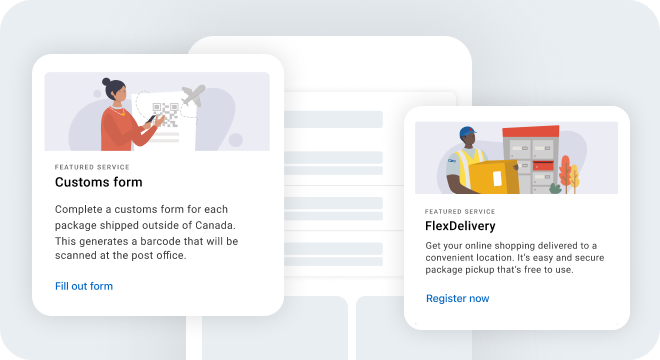
Surface relevant services based on user behavior, location, and service history. Cards adapt to show the right service at the right time—whether it's mailbox management for new residents or identity verification for users who need secure access.
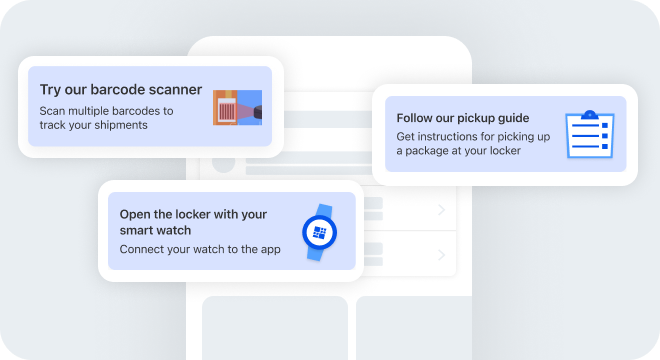
Integrate educational content, service highlights, and timely updates into the feed. Users discover services through contextually relevant stories and tips rather than static navigation menus—making discovery feel natural and helpful.
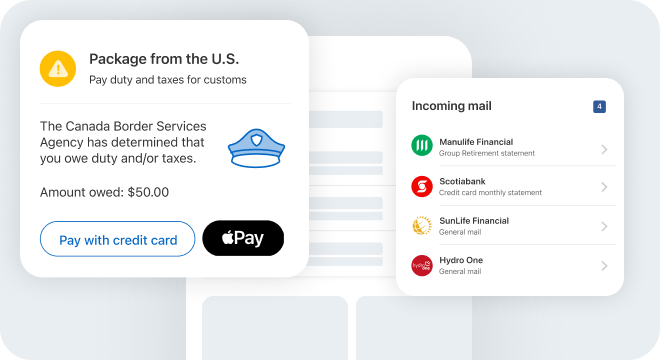
Start with the most relevant services and content, then allow users to explore deeper. The feed prioritizes high-value services while providing easy access to the full service catalog through organized sections.

Leverage user data (package history, location, app usage) to recommend services when they're most valuable. Show business tools during tax season, mailbox services for frequent travelers, or identity verification when security is top-of-mind.
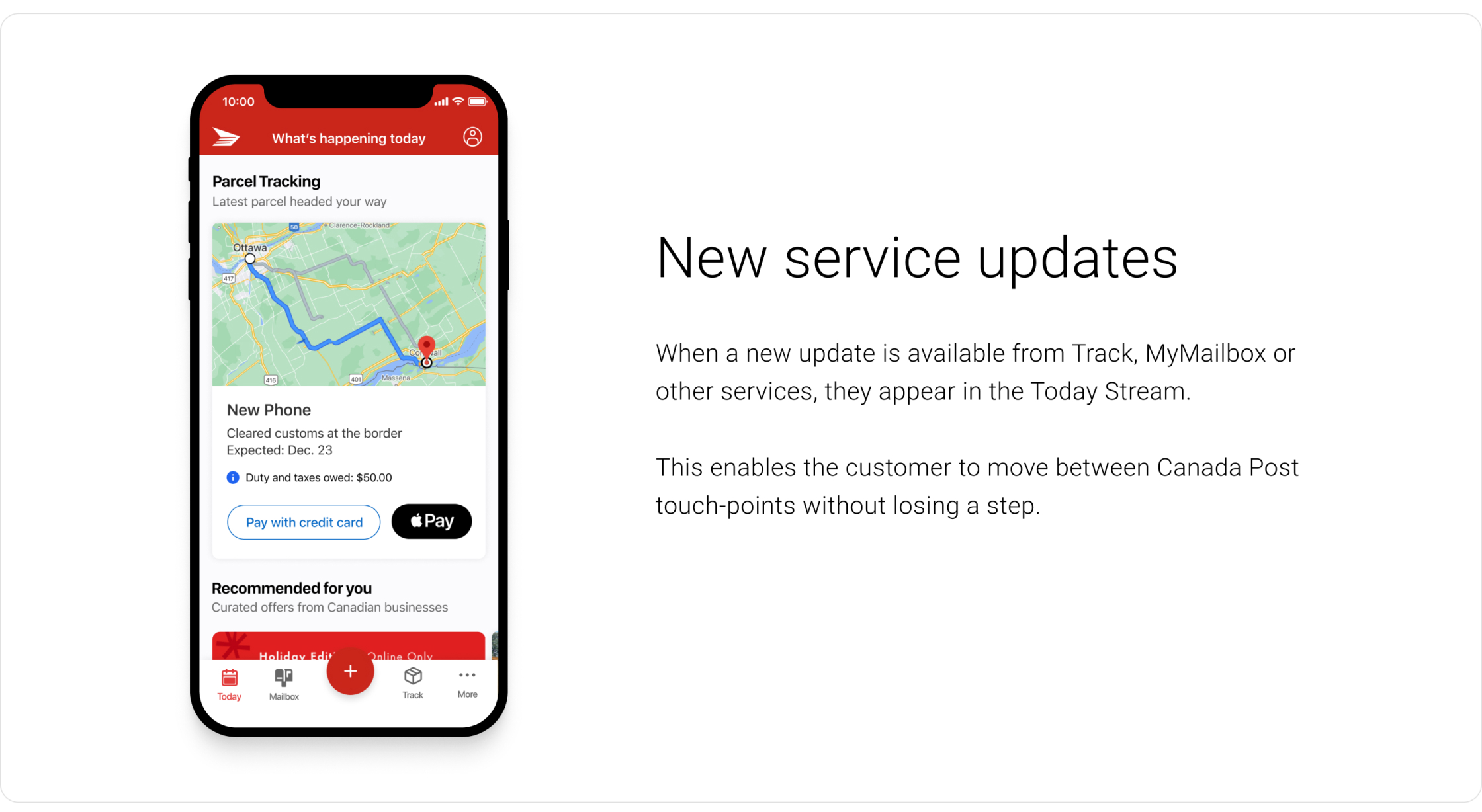
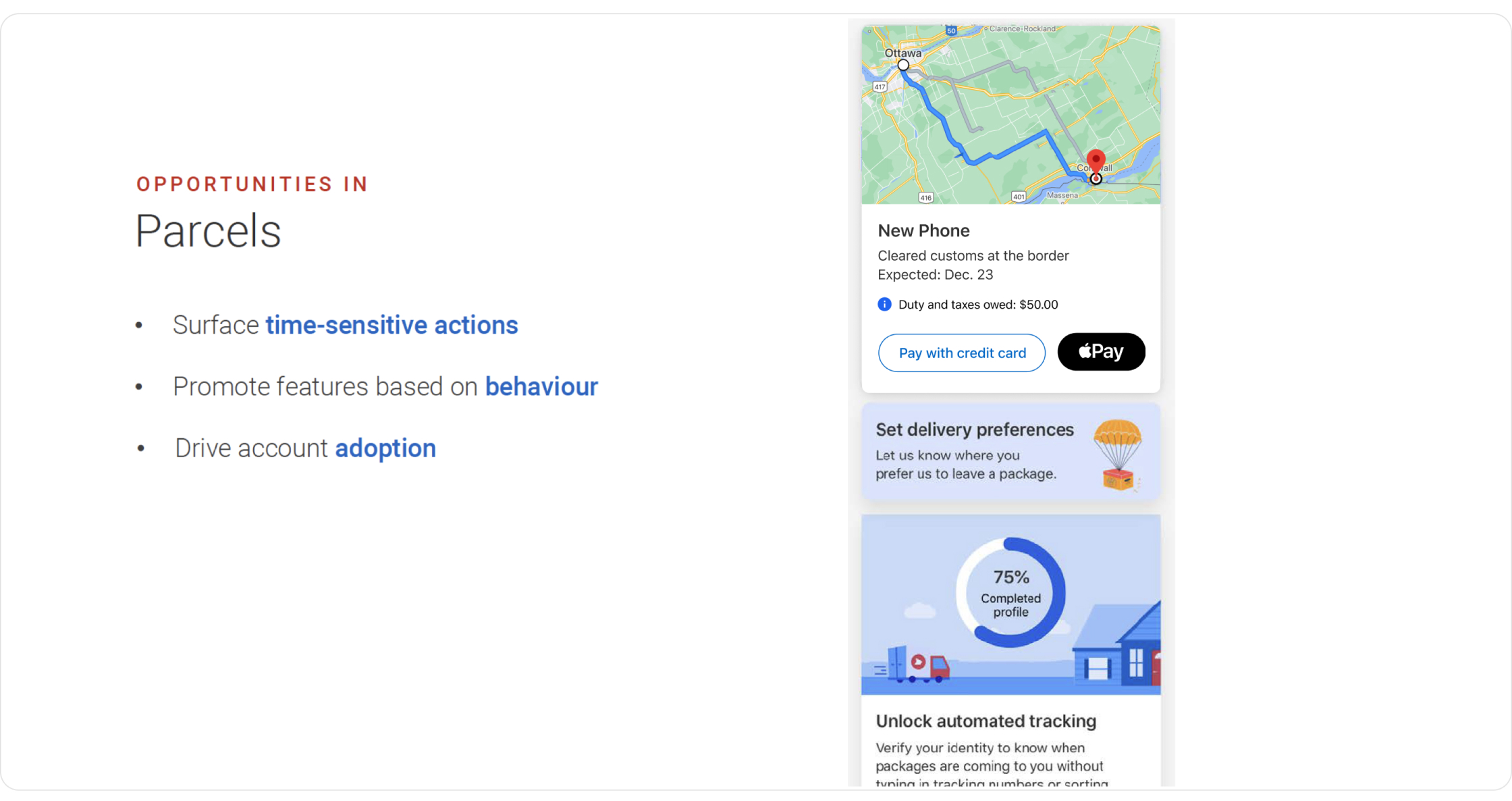
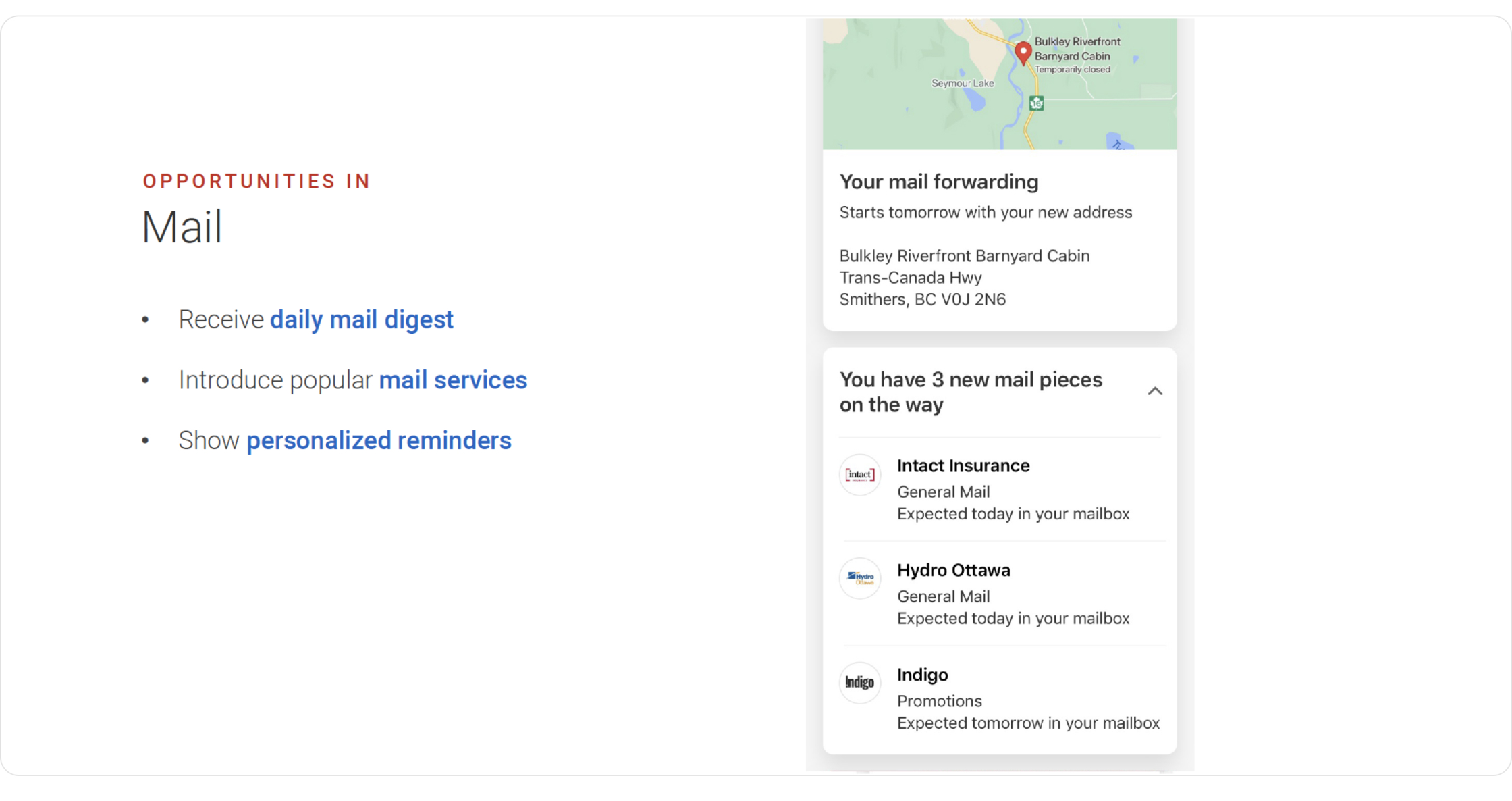
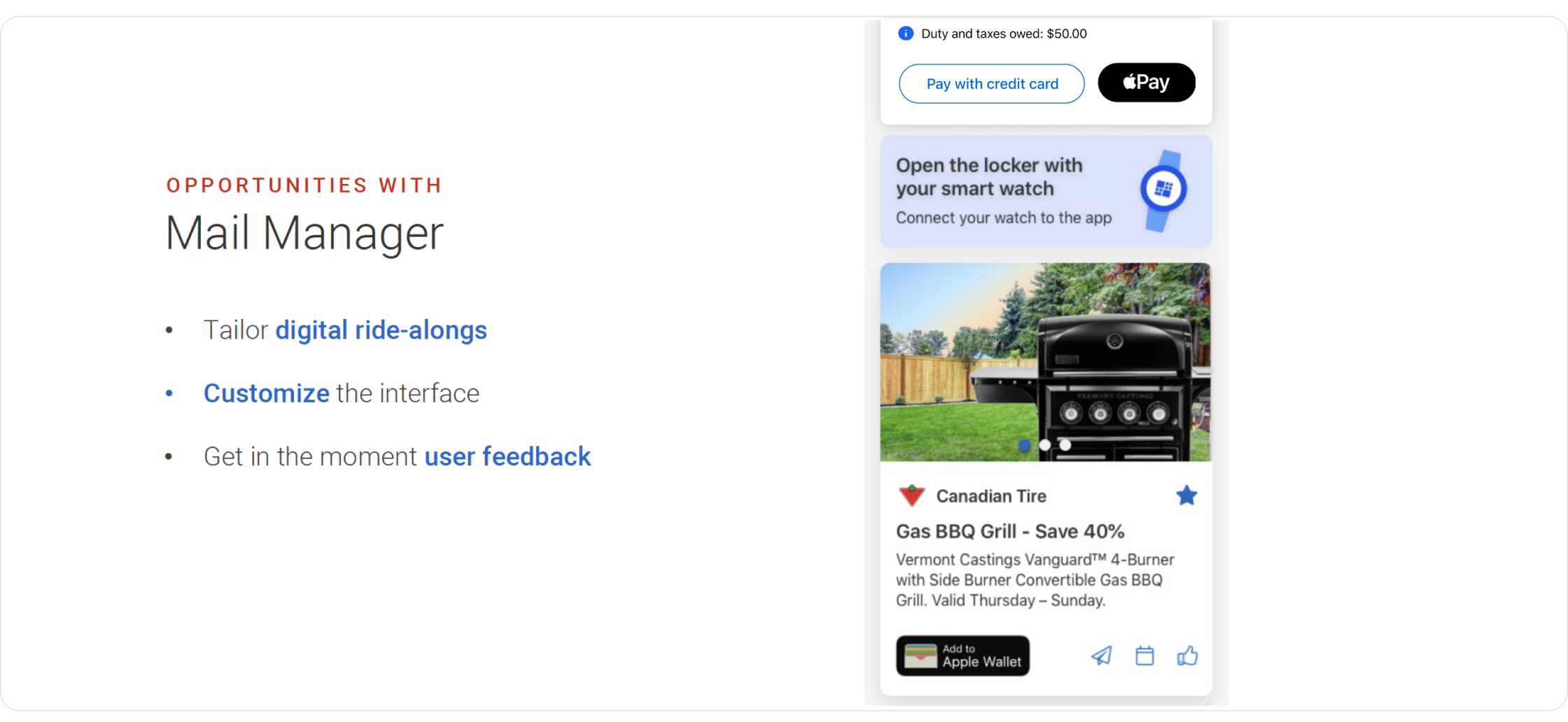
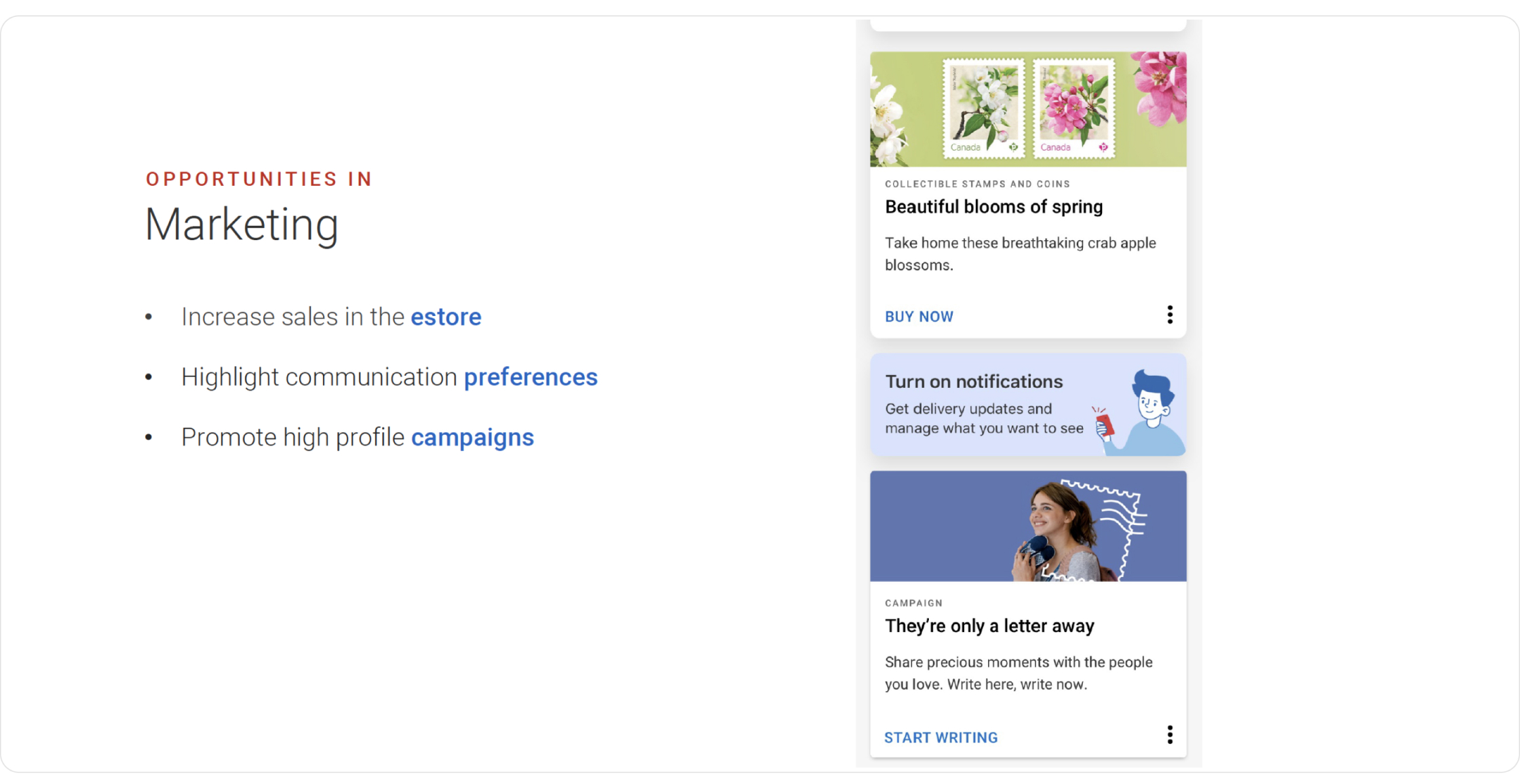
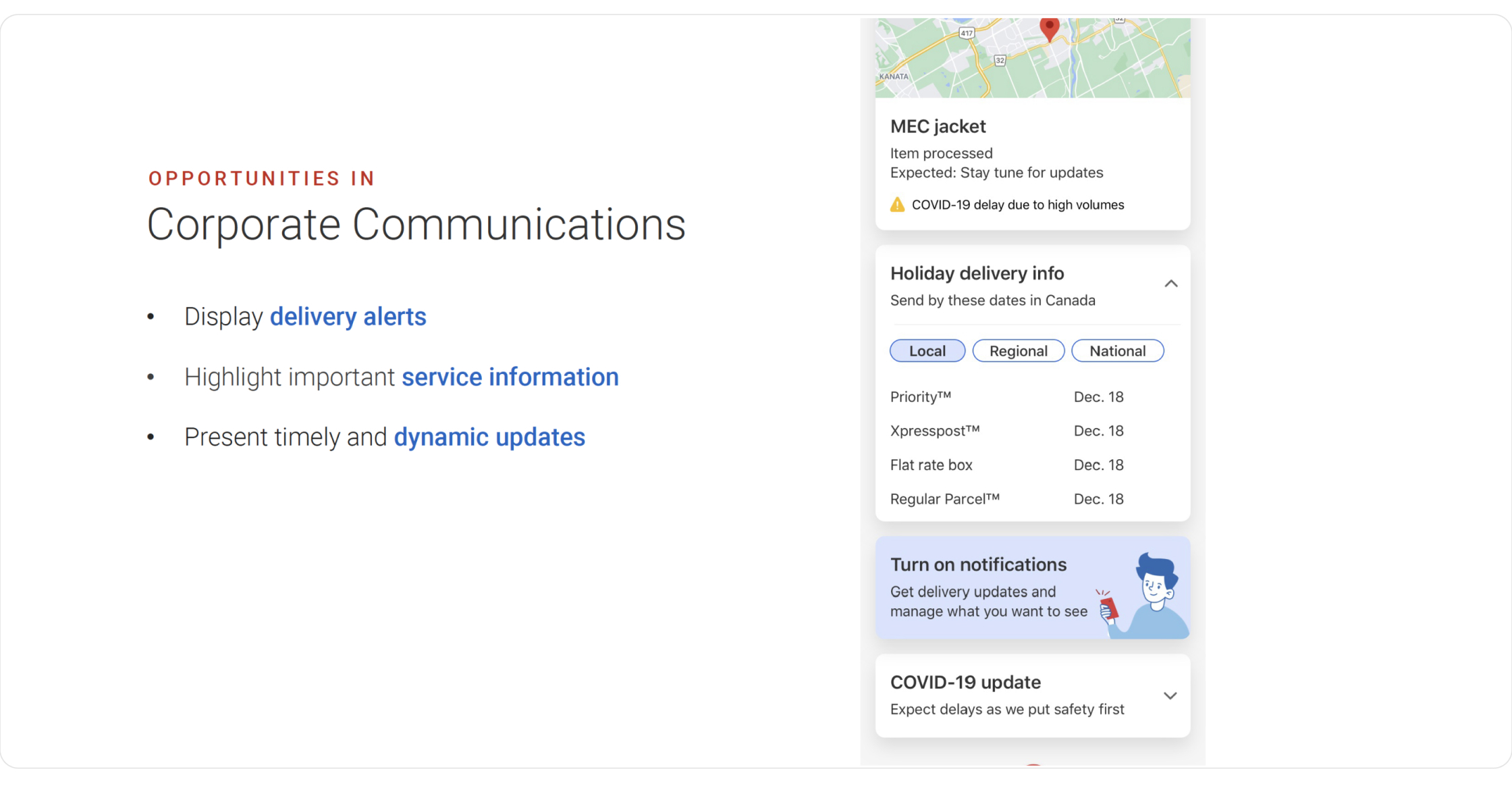
To extend the value of the Today feed beyond static recommendations, we built a personalization engine that adapts content based on user behavior, location, and service history. The engine analyzes package tracking patterns, service usage, and seasonal trends to surface relevant services at the optimal moment, transforming the feed from a generic homepage into a personalized service discovery experience.
The personalization engine introduced dynamic content prioritization, allowing the feed to adapt in real-time to user needs while maintaining service diversity. By combining behavioral data, contextual signals, and content strategy, the Today feed helped transform service discovery from a one-time exploration into an ongoing, personalized relationship between users and Canada Post.
The Today feed initiative transformed Canada Post's app from a single-purpose package tracker into a comprehensive service discovery platform, successfully bridging user needs with business opportunities through personalized, content-driven discovery.
Measured Outcomes:
The success of the Today feed demonstrated that product discovery could be transformed from passive navigation into active, personalized engagement, increasing both user value and business revenue.
Through this initiative, I learned that effective product discovery goes beyond navigation design. It requires personalization, contextual relevance, and progressive disclosure. By aligning product, design, and engineering around a shared goal of discovery, we transformed hidden services into discoverable opportunities, increasing both user engagement and business revenue. Content-driven discovery, personalized recommendations, and adaptive interfaces proved essential in turning a single-purpose app into a comprehensive service hub.
Users rarely explore secondary navigation menus. During research, I learned that content-driven discovery, through tips, service highlights, and contextual stories, was far more effective than static navigation structures. By integrating educational content and timely updates into the feed, users discovered services naturally rather than through deliberate exploration. The key was making discovery feel helpful, not promotional.
Effective personalization demands understanding user behavior, location, and service history. We built recommendation algorithms that surfaced services based on actual usage patterns, not assumptions. Users who frequently shipped packages saw business shipping tools. New residents saw mailbox management services. Tax season prompted identity verification recommendations. This data-driven approach increased relevance and engagement significantly.
A feed with too many services can feel overwhelming. We prioritized high-value services and content at the top, then allowed users to explore deeper through organized sections. Progressive disclosure ensured users weren't bombarded with options while still providing access to the full service catalog. This balance between relevance and comprehensiveness proved critical in maintaining engagement without causing decision paralysis.
Thanks to cross‑functional partners across product, research, engineering and operations.
Mentored 4 junior designers on accessibility testing and user research, perfecting their visual design craft and shaping them into confident contributors to future Canada Post UX projects.