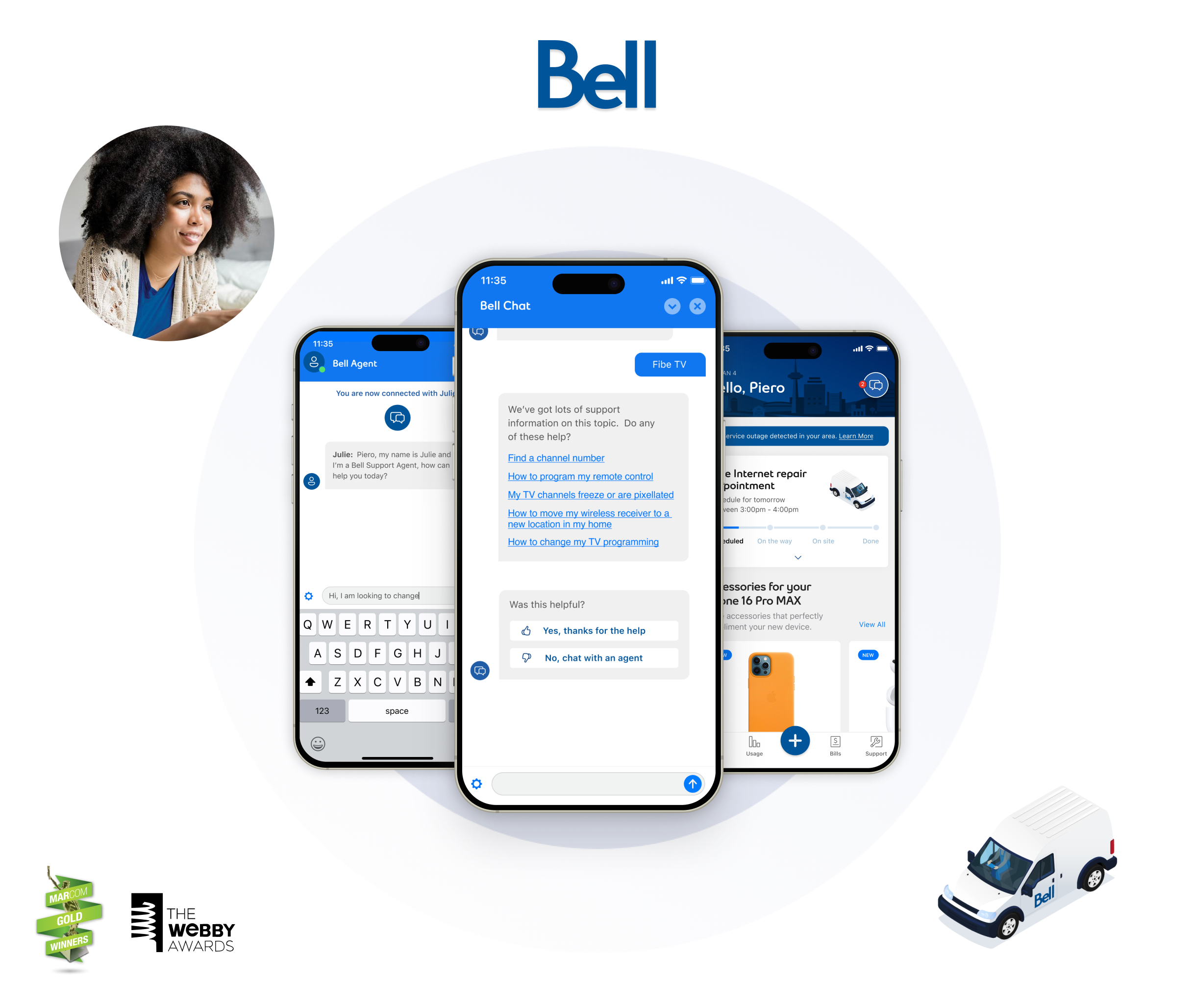
As customer support demand surged during the pandemic, Bell saw an opportunity to reduce strain on call centers by introducing a virtual assistant experience powered by conversational AI.
I led the product and UX direction for an in-app Virtual Assistant feature designed to reduce support dependency and increase self-serve resolution for billing, usage, and plan questions. The feature aimed to bridge the gap between static help content and expensive live support by delivering contextual, task-oriented conversational assistance within MyBell Mobile.
When the COVID-19 pandemic forced call center lockdowns and stay-at-home orders, Bell faced an unprecedented challenge: a surge in demand for TV and internet services from customers working and learning from home, combined with drastically reduced call center capacity. Support centers were overwhelmed, wait times stretched to hours, and customers became increasingly frustrated by their inability to get timely help, creating a crisis that threatened both customer satisfaction and business revenue.

User problems:
Business problem:
As a business the inevitable churn due to not being able to offer proper and quick support was costing the organization thousands in revenue losses.
I owned the end-to-end experience design for Bell's virtual assistant, an AI-powered conversational interface designed to handle support inquiries, service onboarding, and troubleshooting without human intervention.
I partnered with Engineering and Analytics to instrument success signals and ensure meaningful measurement.
Bell's leadership recognized that the pandemic-driven support crisis was causing significant revenue loss through customer churn and service delays. The virtual assistant initiative aimed to transform support from a human-only bottleneck into an automated, scalable solution. Key business objectives included:
Goals
Constraints
We benchmarked conversational AI experiences from leading technology companies (Amazon Alexa, Google Assistant, Apple Siri) and service platforms (banking chatbots, e-commerce assistants) to inform a more natural, effective virtual assistant experience.
Other carriers used generic bots that often failed on context or intent.
Our opportunity was not to match them, but to design for predictability over novelty, focusing on:
High-value use cases first, clear fallback patterns
and crisp answer hierarchy.
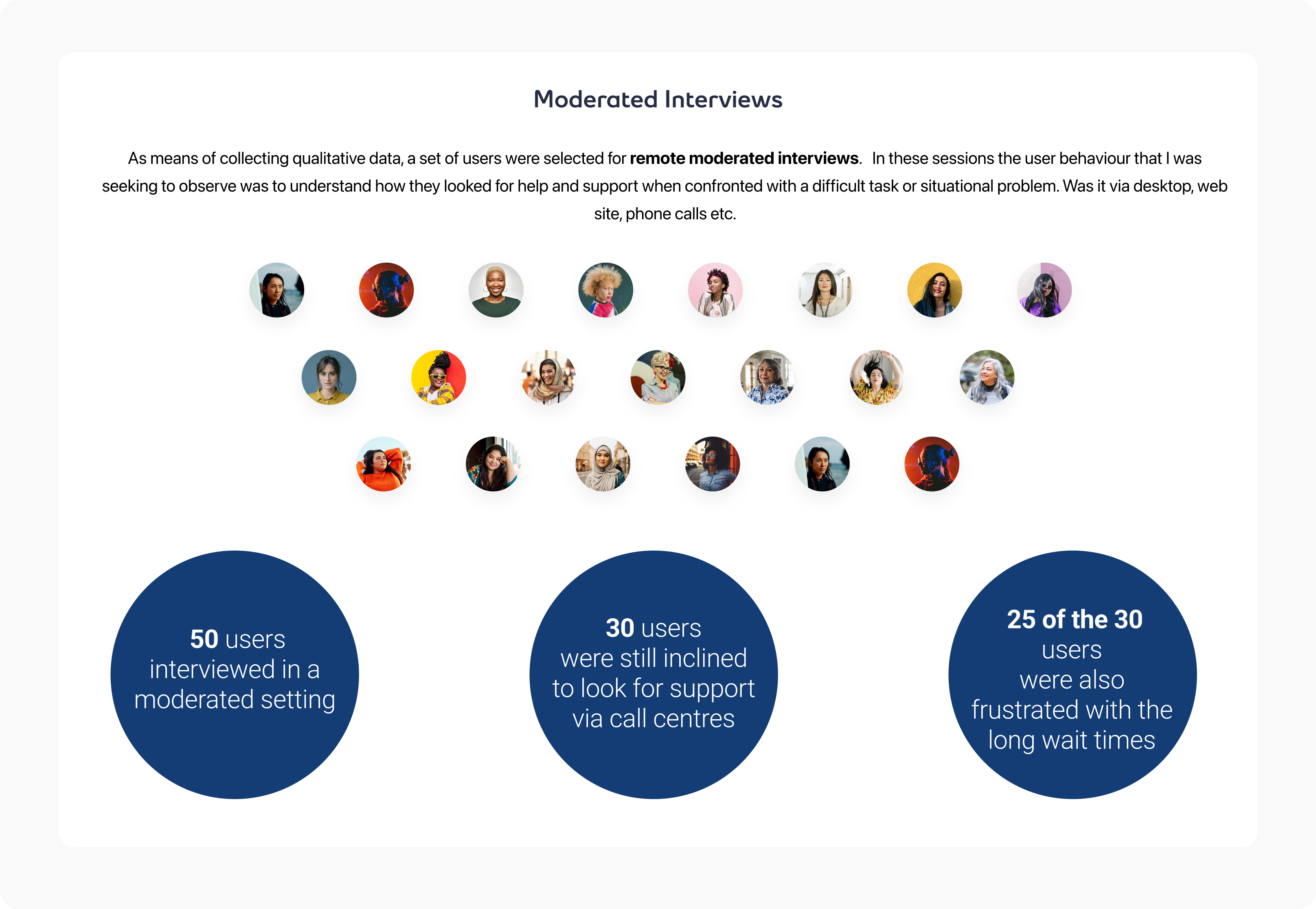
Support logs and user interviews surfaced these patterns:
This reframed the virtual assistant’s purpose: Not conversation per se, but localized guidance at the point of need.
The strategic direction I prioritized:
Task-oriented triggers: Assistant appears at moments of hesitation (ex: deep in a bill detail screen)
Predictable and accurate responses: Focus on high-confidence answers over generative responses
Clear fallback paths: When the assistant isn’t sure, guide users to the right help or support action via live agent
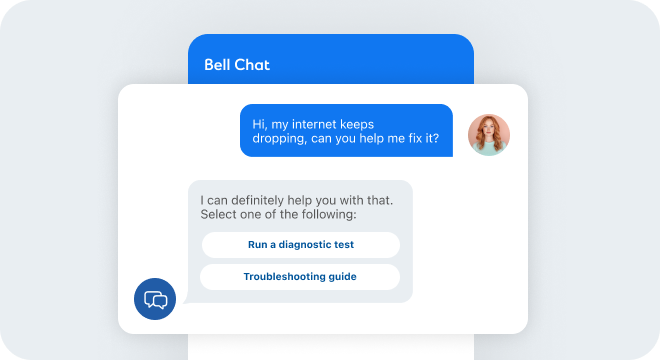
Enable users to ask questions in their own words, not rigid menu options. The assistant understands intent from conversational input, making support feel natural and human-like rather than robotic or scripted.
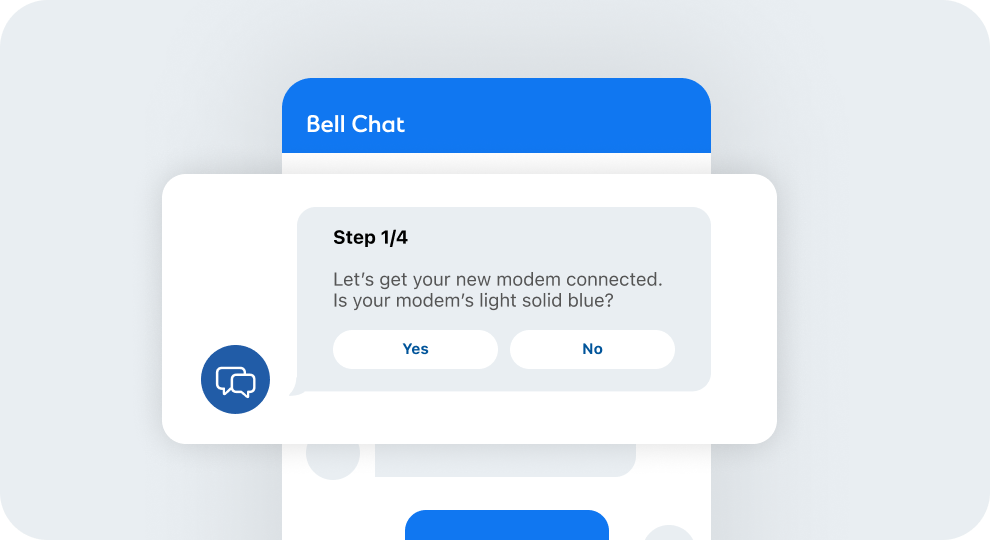
Guide new customers through service setup step-by-step. The assistant helps customers activate services, configure equipment, and troubleshoot initial setup issues, reducing the need for human agent intervention and preventing service delays.
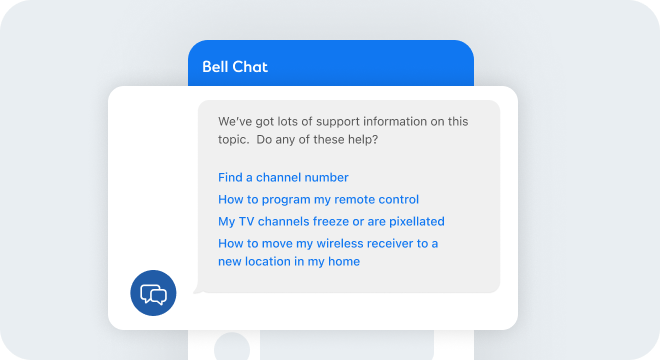
Leverage account data and service history to provide personalized troubleshooting. The assistant understands the user's services, recent activities, and common issues to offer relevant, actionable solutions without asking for context the system already knows.
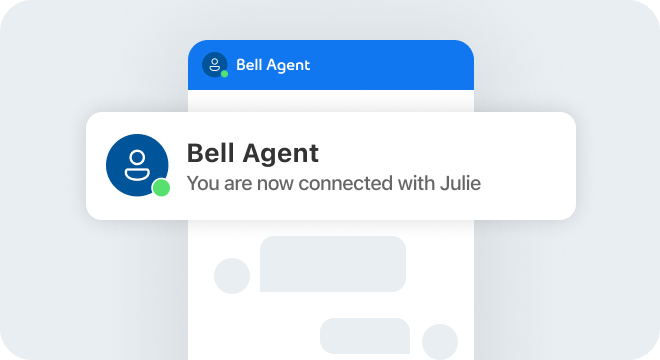
When the assistant can't resolve an issue, it smoothly transitions to a human agent with full context. The handoff preserves conversation history, account details, and attempted solutions, enabling agents to pick up where the assistant left off without repeating information.
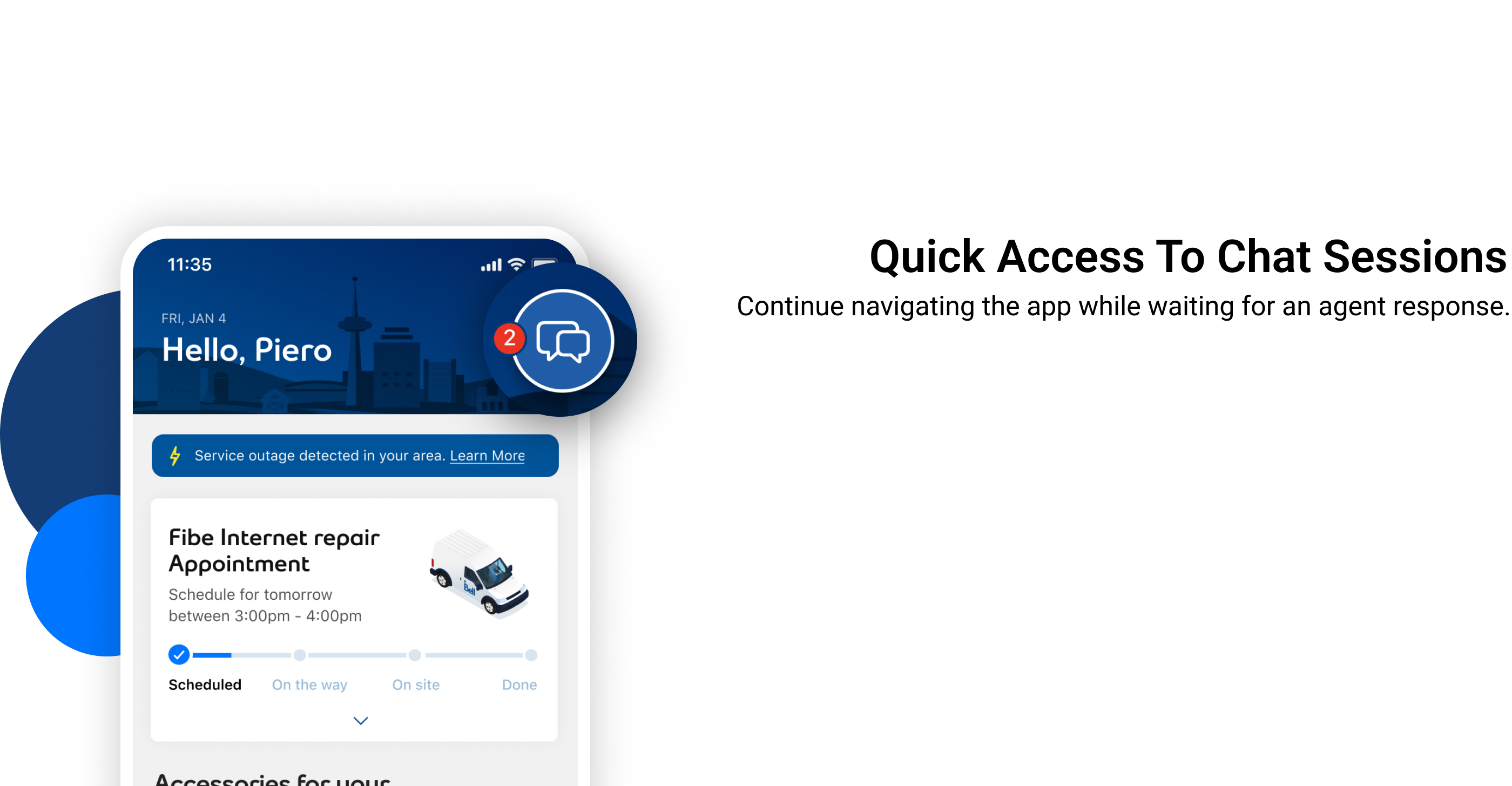
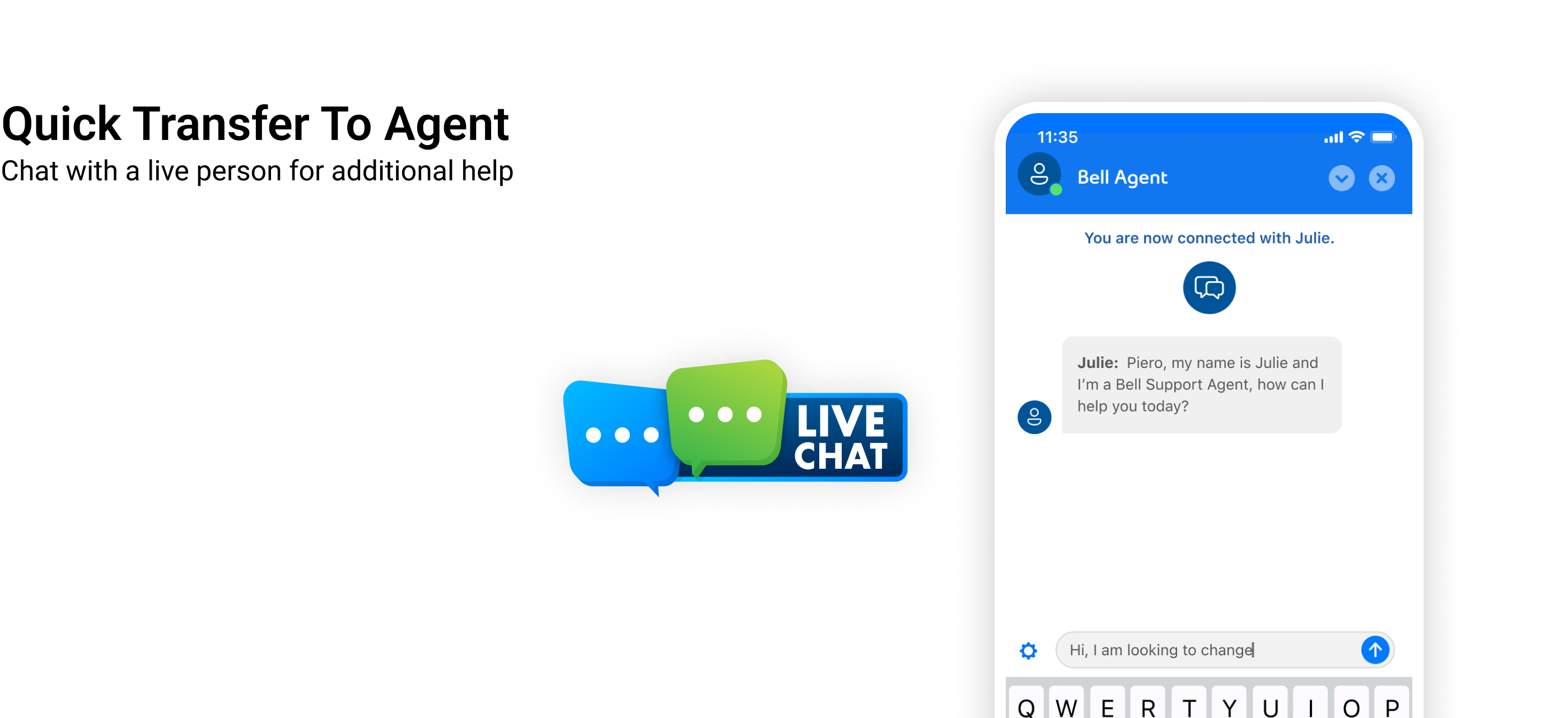
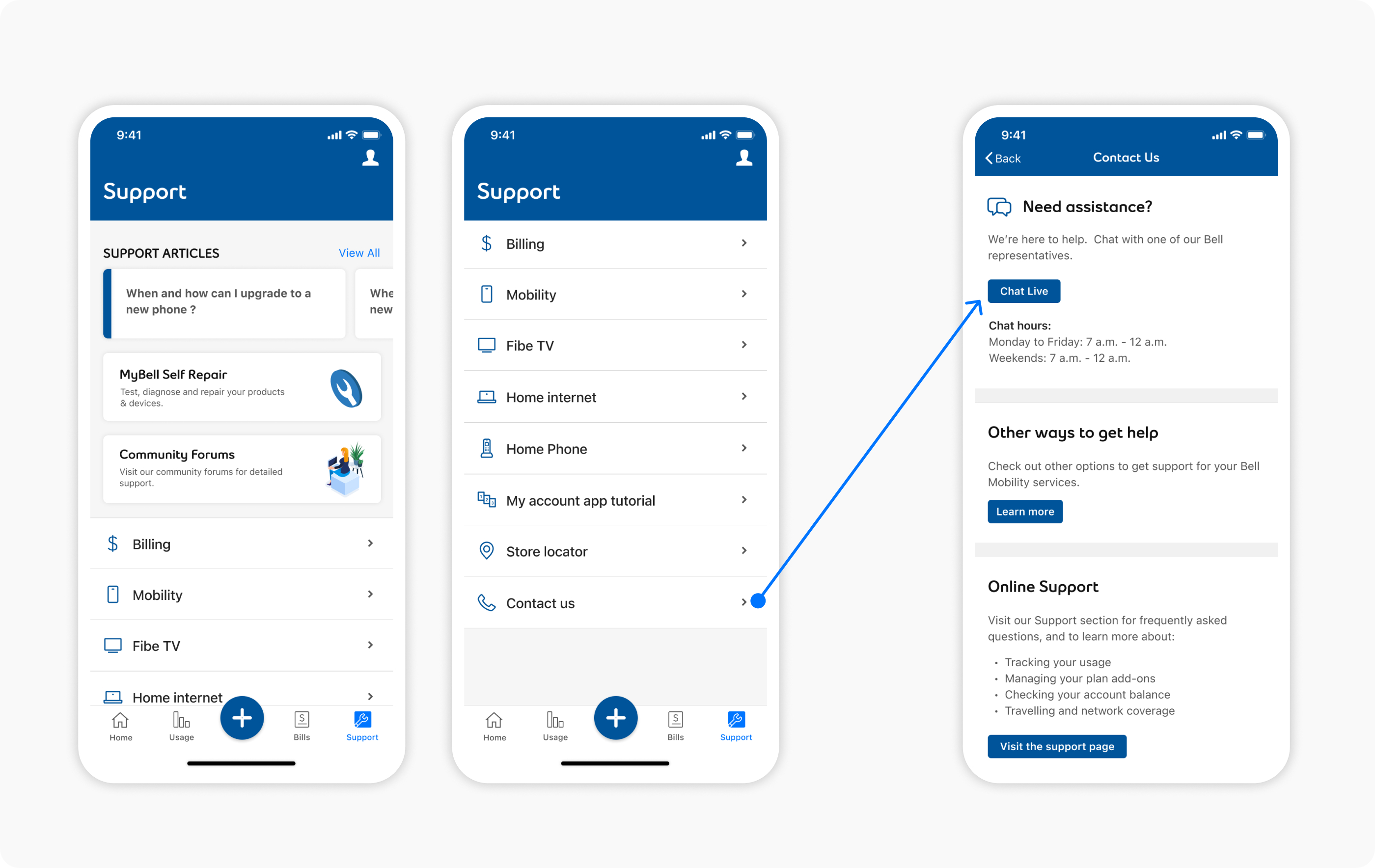 Defining the entry point
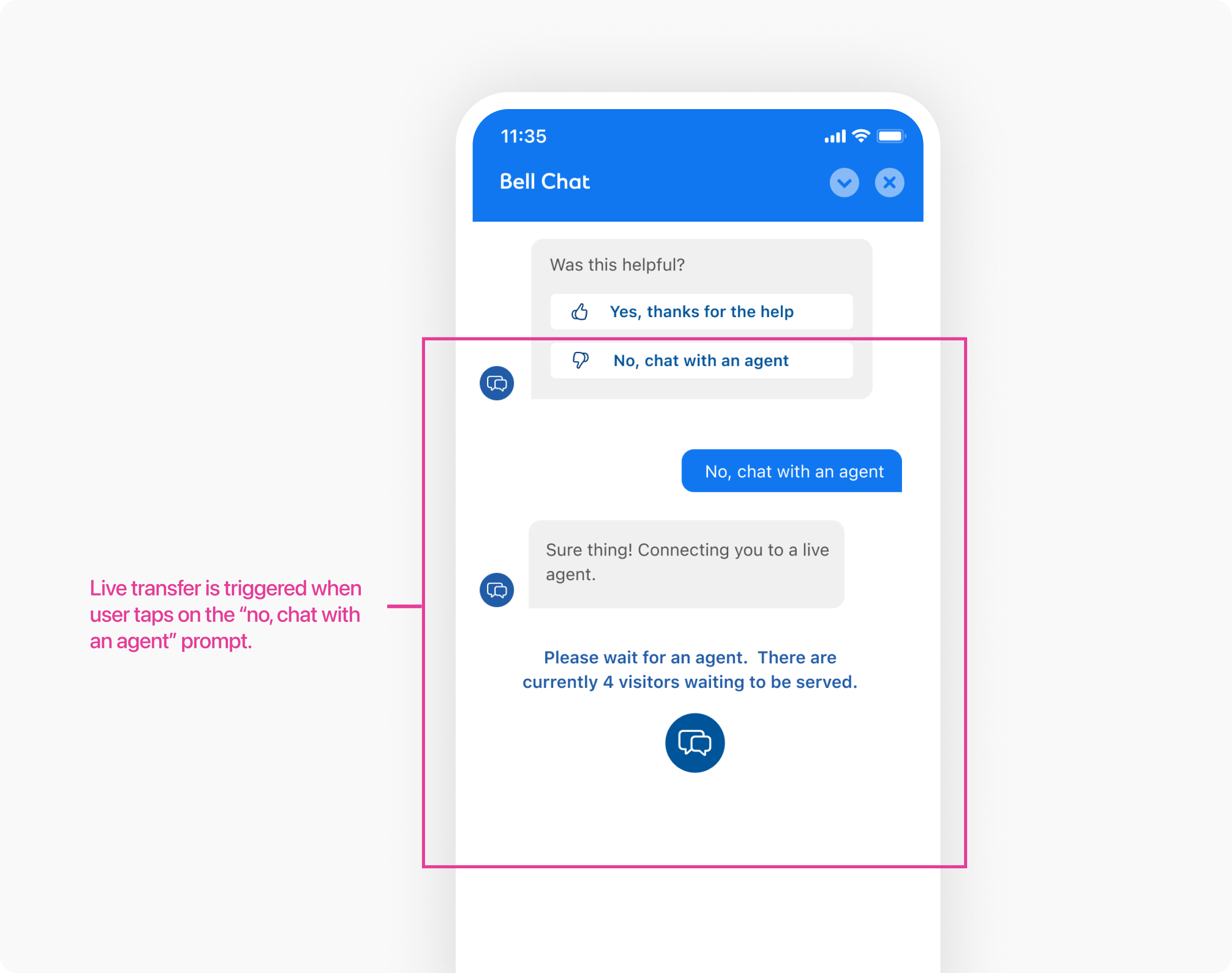 Transfer to a live Bell agent
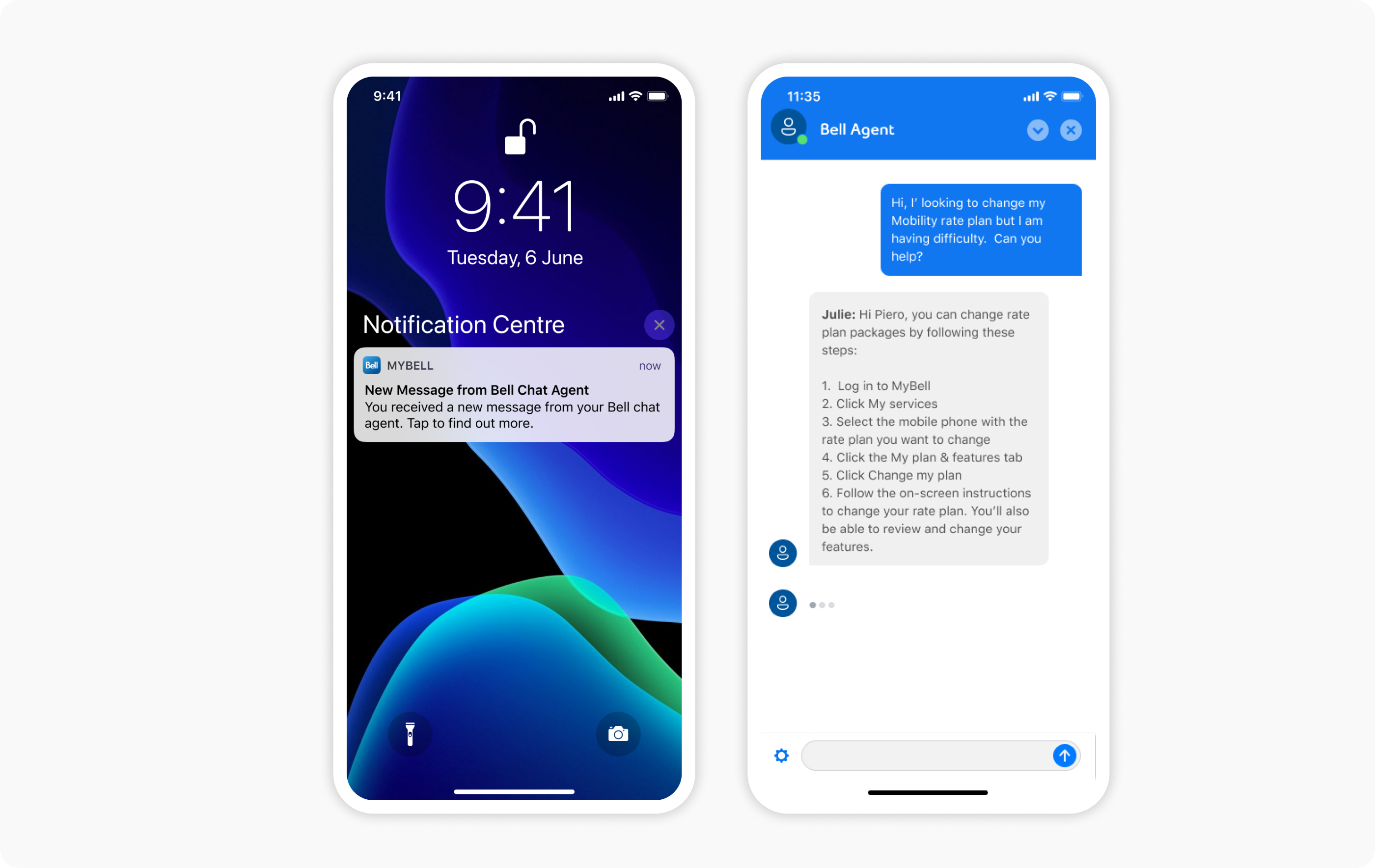 Leveraging Push notifications
To extend the value of the virtual assistant beyond simple Q&A, we designed an intelligent conversation engine that learns from user interactions and improves over time. The architecture supports multi-turn conversations, context preservation, and intent recognition—enabling the assistant to handle complex support scenarios without human intervention.
The conversational AI engine introduced sentiment analysis, proactive suggestions, and predictive problem-solving—helping the assistant anticipate user needs and offer solutions before users even ask. By combining natural language processing, machine learning, and human-centered design, the virtual assistant transformed support from a reactive service into a proactive, always-available solution that reduces wait times and improves customer satisfaction.
We did not launch open conversational AI or full natural language generation. Generative responses increase unpredictability and risk misinformation in billing/plan context.
Trade-off: Chat breadth vs accuracy and trust
Outcome: High confidence, predictable guidance patterns
There was early pressure to trigger the assistant at too many points in the UI. I filtered triggers down to where users expressed question signals to avoid noise and distraction.
Trade-off: Immediate availability vs contextual relevance
Outcome: Higher meaningful engagement and fewer false positives
Instead of building our own NLU stack or deep AI infrastructure, we leveraged deterministic intent maps with curated content. This minimized dependency on backend systems and reduced risk of incorrect “answers.”
Trade-off: Generative vs deterministic responses
Outcome: Predictable output and reduced support escalation
We standardized response framing and answer hierarchy for all assistant replies. This created a reusable pattern across contexts and reduced variance in user outcomes.
Trade-off: Max variability vs consistent UX grammar
Impact: Greater predictability and user confidence
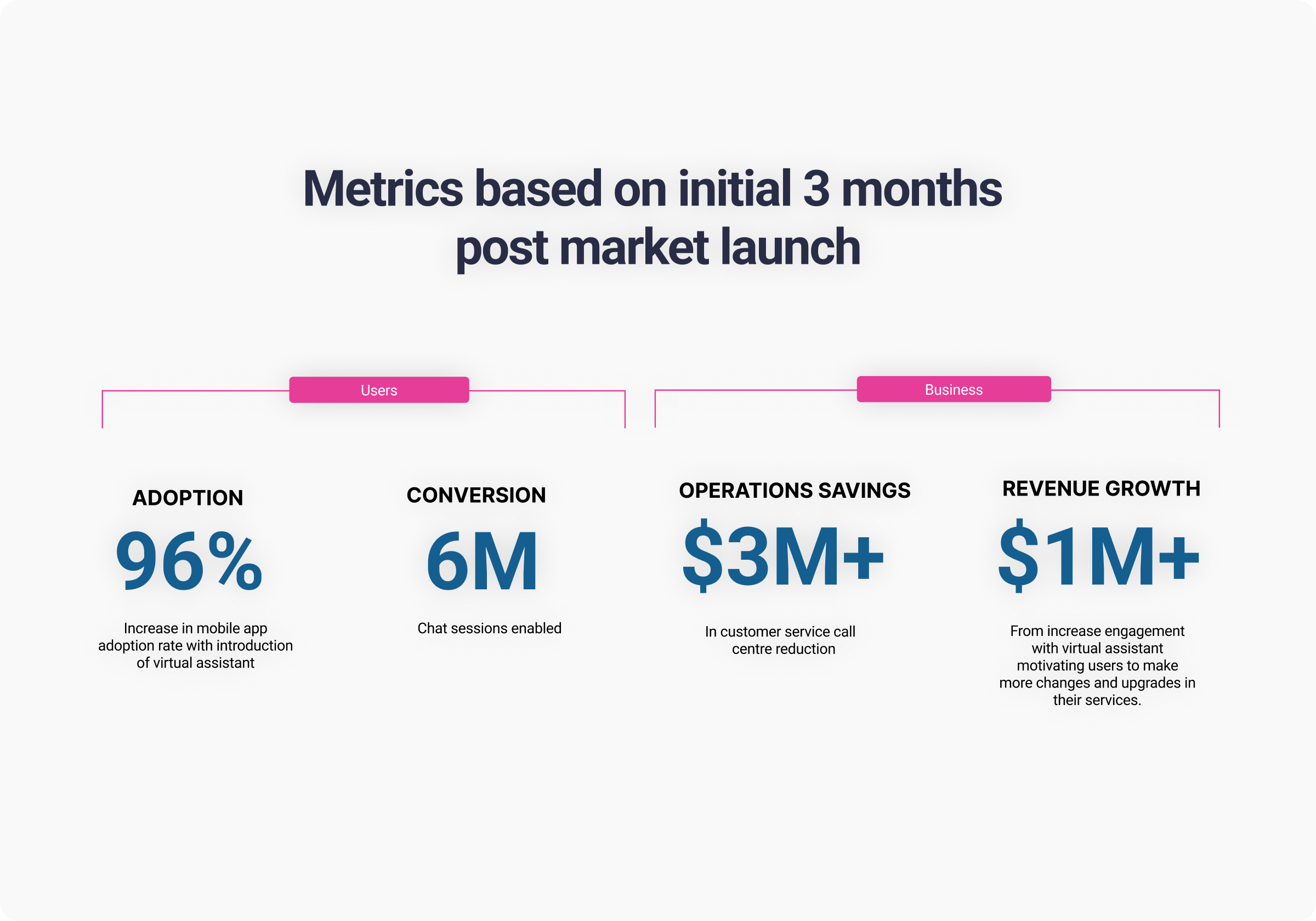
The virtual assistant initiative transformed Bell's support experience from a human-only bottleneck into an automated, scalable solution—successfully bridging support demand with business efficiency through AI-powered assistance and seamless human handoff.
Measured Outcomes:
The success of the virtual assistant demonstrated that support crises could be solved, not through more call center agents, but through smarter, AI-powered support design.
Effective virtual assistants are not about chat technology, they’re about trust, context, and controlled escalation.
Users prefer asking questions in their own words over navigating rigid menus. Designing around intent, not hierarchy, increases engagement and task completion.
Single-turn responses solve simple issues. Preserving context across turns enables complex problem resolution and improves self-serve rates.
A virtual assistant doesn’t need to solve everything. Seamless handoff, with preserved history and context, prevents repetition and reduces frustration.