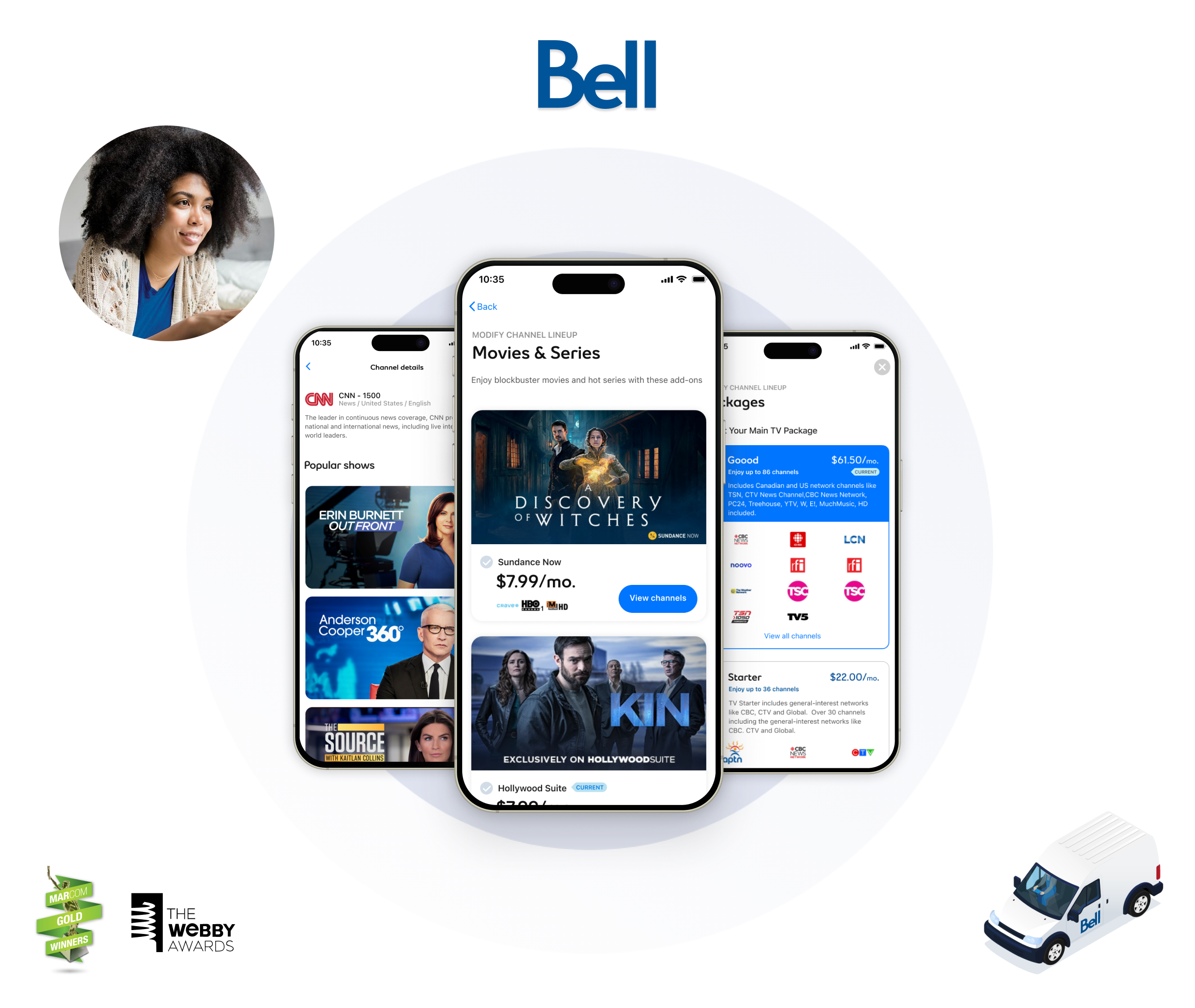
I owned the end-to-end UX direction for bringing TV channel and package management into MyBell Mobile, enabling customers to modify subscriptions, manage add-ons, and understand entitlements directly from mobile. This initiative shifted TV package control from call-center dependency to in-app self-serve, reducing friction while protecting revenue integrity.
TV package changes historically required: Calling suppoort, navigating legacy web portals and understanding unclear bundle logic.
These interactions drove high support volume and slowed upsell opportunities. The business goal was clear. Enable mobile self-serve package management without increasing billing errors, churn risk, or entitlement conflicts.
Customer frustrations:
Business problems:
How do we make complex subscription logic understandable and actionable, without oversimplifying billing realities?
I owned:
I furthermore worked closely with engineering to ensure UI patterns respected backend entitlement constraints.
The project targeted higher self-serve usage and incremental revenue without increasing support costs. Key goals included:
Goals
Constraints
I analyzed how streaming platforms and telecom peers surface bundles, add-ons, and upgrades. The strongest flows focus on quick comparison, transparent price deltas, and a clean confirmation step that reduces anxiety.
Interviews and call-center analysis highlighted a few consistent needs:
I created a mobile flow that keeps customers oriented with clear summaries, category-based browsing, and price deltas that update as they make selections.
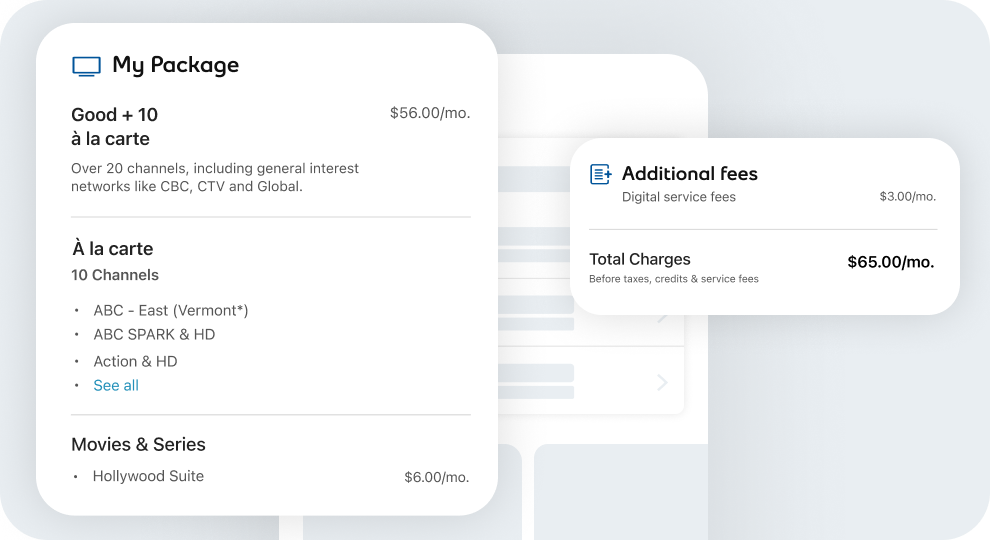
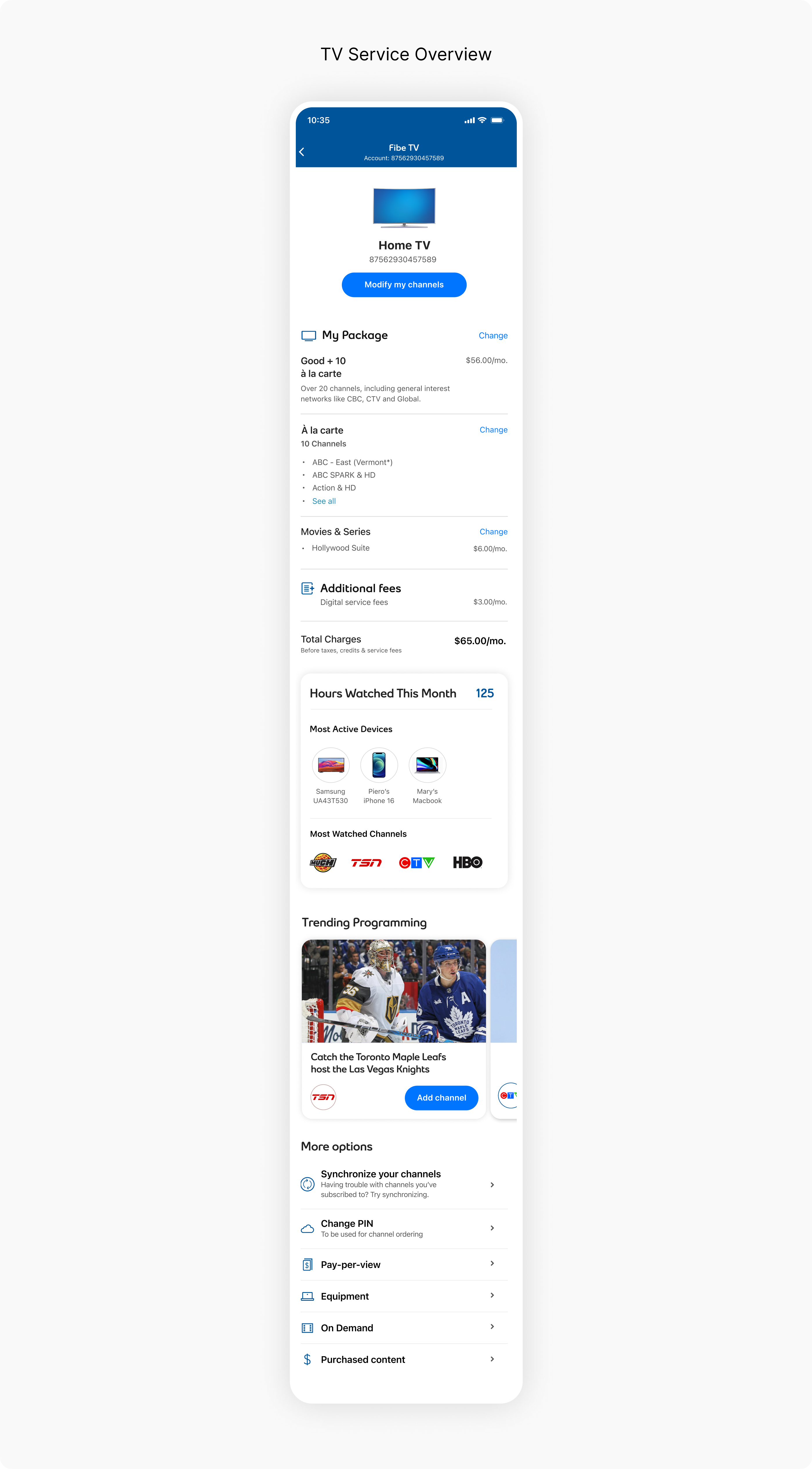
A clear snapshot of the current plan with top channels and monthly price.
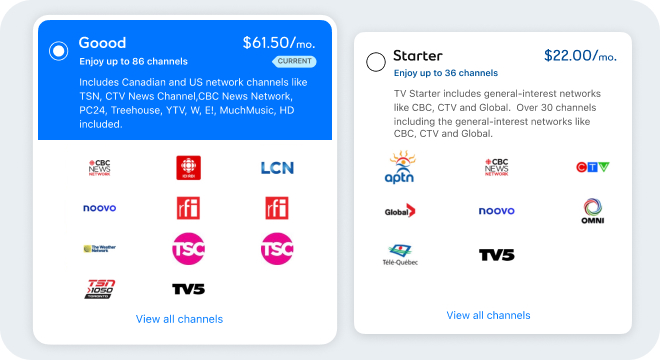
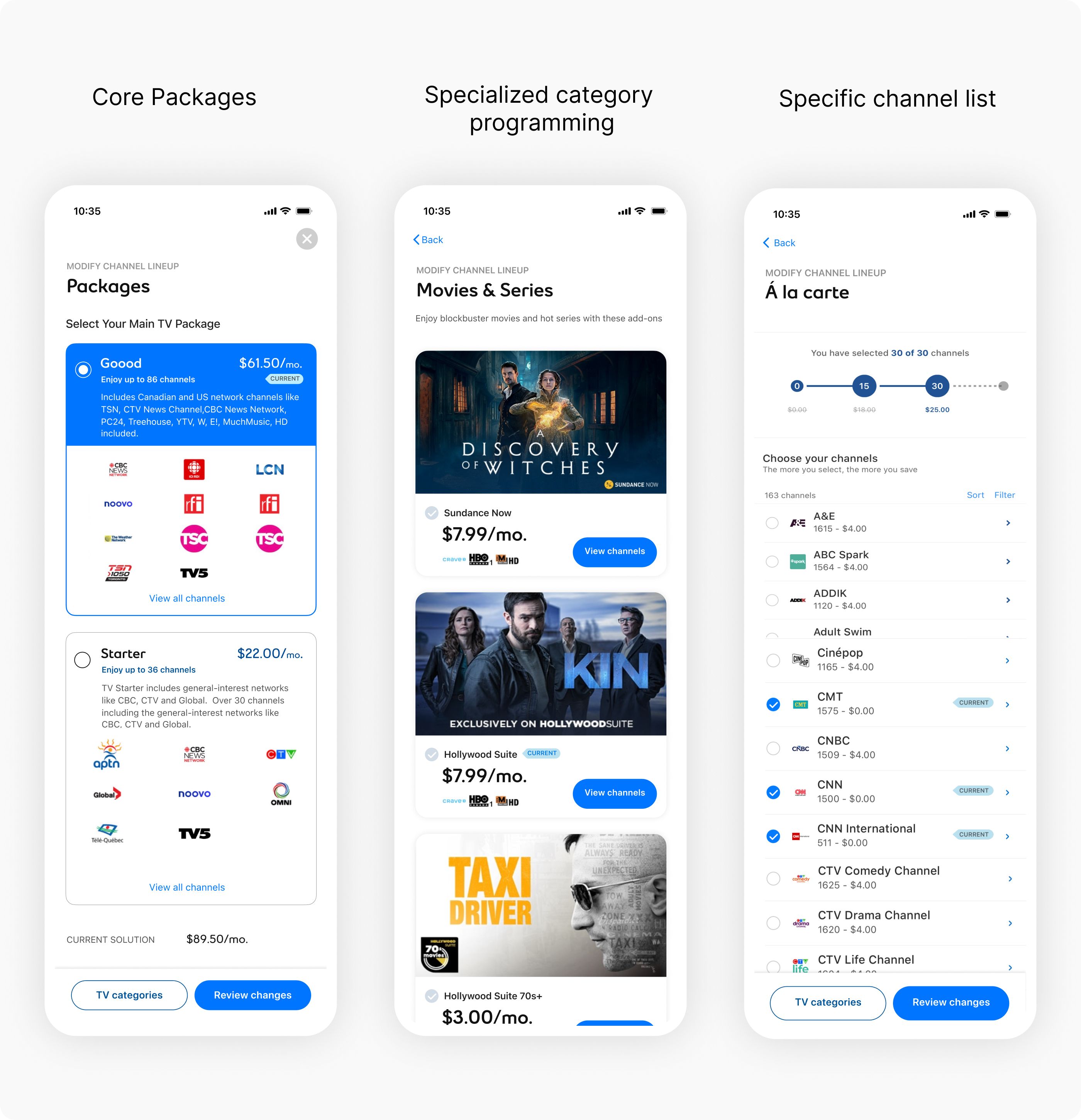
Side-by-side comparison with price differences, helping customers decide quickly.
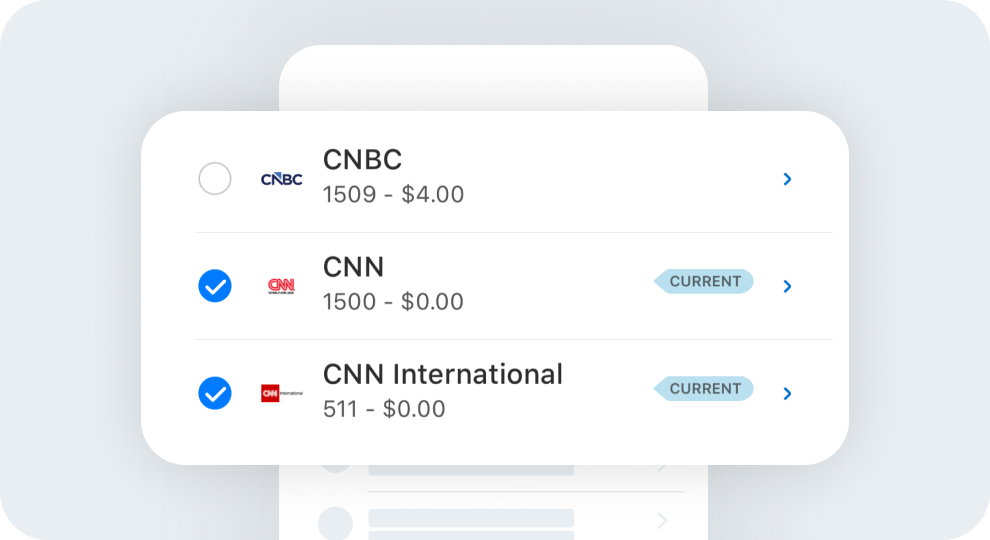
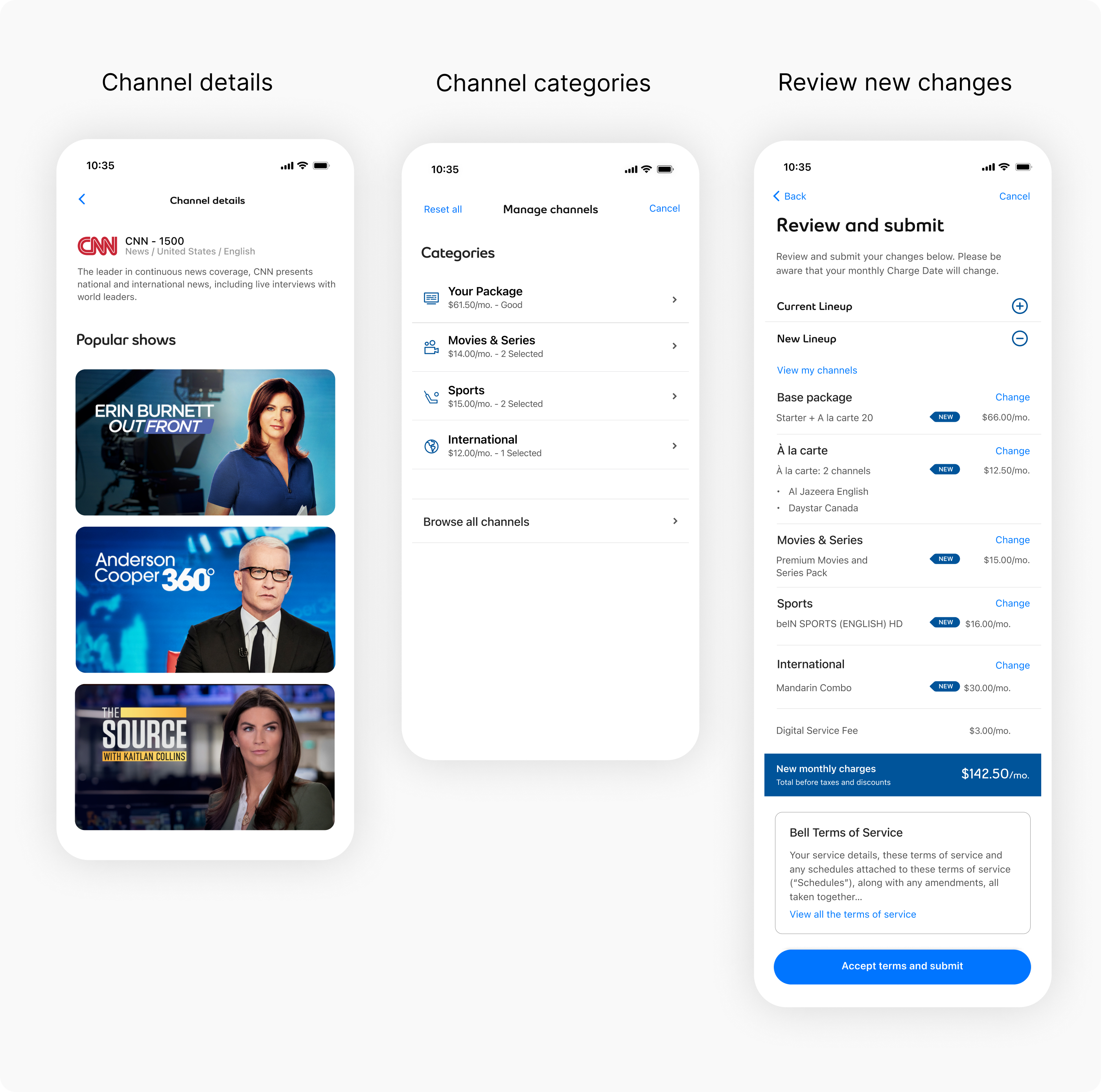
A la carte categories for sports, movies, and specialty channels with clear pricing.
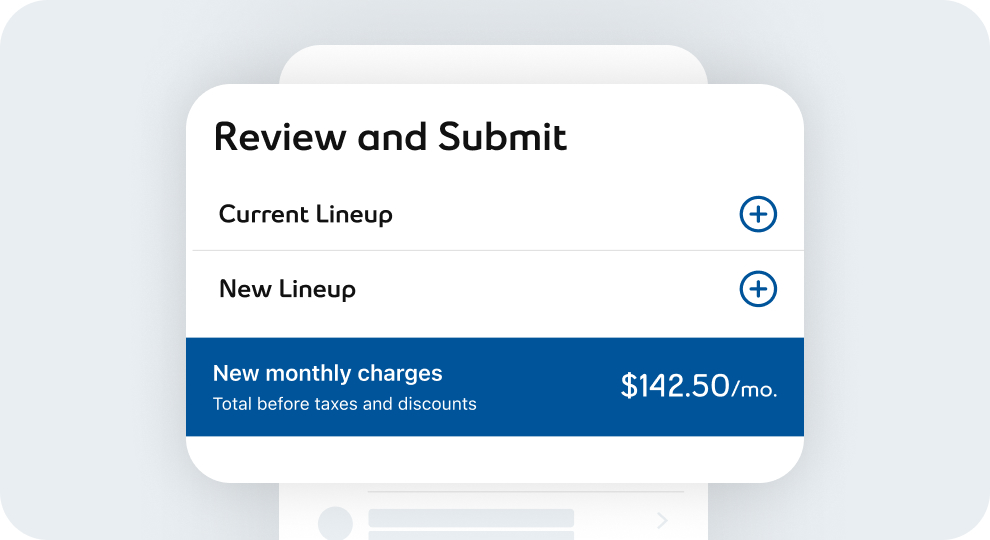
A final summary of changes, effective date, and total monthly cost before submission.
We did not allow fully granular, per-channel customization in the first release. While it offered flexibility, it increased entitlement complexity and billing risk.
Trade-off: Flexibility vs operational stability
Outcome: Reduced provisioning errors and protected revenue integrity.
There was pressure to surface all promotional logic inline within package selection. I simplified pricing communication into structured summaries with expandable detail.
Trade-off: Full transparency at once vs cognitive overload
Outcome: Faster decision-making and fewer abandoned changes.
We aligned mobile package management flows with existing billing cycle cutoffs and provisioning constraints. Rather than creating new backend logic, we mirrored known rules in the UI.
Trade-off: Dynamic flexibility vs predictable execution
Outcome: Fewer failed transactions and reduced engineering complexity.
We standardized package visualization into a modular entitlement model. Instead of showing flat channel lists, we grouped channels by functional bundles.
Trade-off: Detailed listing vs conceptual clarity
Impact: Improved comprehension and reduced subscription modification errors.